


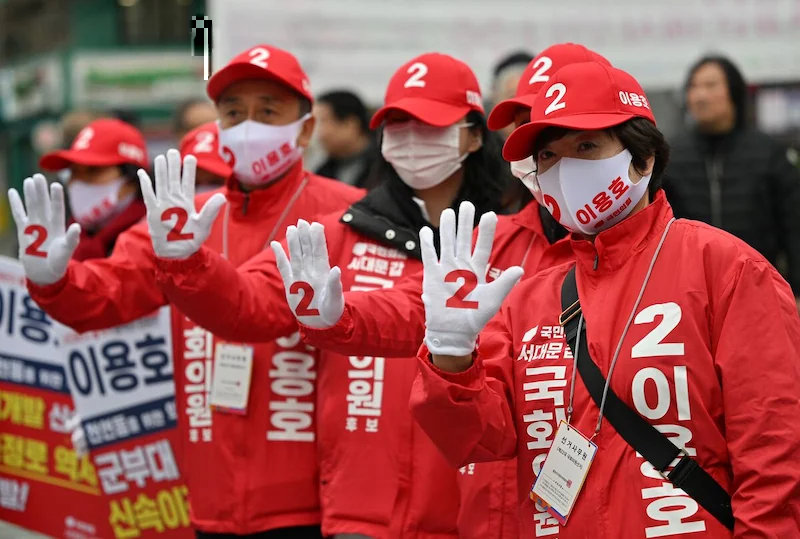


In the latest Gallup Korea poll released ahead of the upcoming nationwide elections in South Korea, President Yoon Suk Yeol's People Power Party has emerged as the front-runner with 37% support. The ruling conservative party's lead, however, may not be substantial enough to secure control of parliament from the progressive bloc, as the main opposition Democratic Party closely trails behind at 29%. The Rebuilding Korea Party, a new player in the political landscape aligning itself with the progressive Democratic Party, stands at 12% in the poll.
The survey, conducted among 1,001 respondents nationwide, marks the final weekly poll by Gallup Korea before the elections set for April 10. Gallup Korea's long history of conducting weekly tracking polls since South Korea's transition to full democracy in the late 1980s adds weight to the results. Despite the conservative party's improved numbers compared to the previous election four years ago, where they stood at 23%, the Democratic Party, then at 44%, remains a formidable contender.
The upcoming elections carry significant implications for President Yoon, as a victory for his party would enable the advancement of pro-business policies and a hardline stance on labor issues. Conversely, if the Democratic Party retains control, it signals a period of potential gridlock for the remaining three years of Yoon's term. The public's attention is likely to be drawn to the ongoing doctor's strike, which has entered its second month. The strike, a response to Yoon's government's proposal to increase medical school spots by 2,000 annually to address a severe doctor shortage, has garnered mixed reactions from voters.
While initial polling indicated support for Yoon's plan to address the doctor shortage, recent weeks have seen a decline in approval among voters seeking an end to the labor action. As the election approaches, the trajectory of support for various parties and the resolution of pressing issues such as the doctor's strike will play a crucial role in shaping the political landscape and determining the direction of governance in South Korea.