


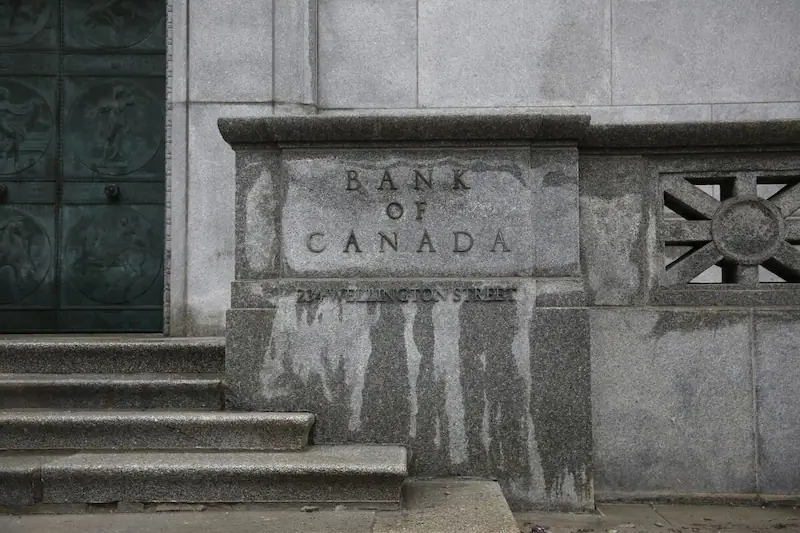


Business sentiment in Canada is showing signs of improvement, offering some relief to policymakers debating whether to cut interest rates. According to a recent Bank of Canada survey, fewer companies are anticipating a recession, indicating a slight easing in economic concerns. While the outlook for sales remains subdued due to the impact of higher rates on activity, large firms in Canada are displaying a more optimistic view on growth prospects.
The survey also revealed that inflation expectations among business leaders are on the decline, leading to a reluctance to increase prices. This shift in sentiment suggests a possible cooling in wage pressures from workers as well. However, Canadian consumers still hold elevated inflation expectations, with many predicting a rate exceeding 3% in the next five years.
Derek Holt, the head of capital markets economics at Bank of Nova Scotia, highlighted the discrepancy between consumer and business inflation expectations, noting that consumers' prolonged anticipation of high inflation could pose challenges for the Bank of Canada in meeting its 2% target. Despite these diverging views, the central bank’s business outlook indicator rose slightly in the first quarter, reflecting a more positive outlook among firms compared to the previous period.
While concerns about uncertainty, interest rates, and input costs persist among businesses, there is a general trend of improvement in the economic landscape. Investment intentions have declined, with fewer firms planning to increase spending on machinery and equipment in the coming year. Factors such as soft demand, high borrowing costs, and capacity constraints continue to restrain investment plans.
In terms of labor market dynamics, businesses expect wage growth to moderate slightly, although it still remains above historical averages. The gradual normalization of wage setting reflects a cautious approach in response to evolving economic conditions. Additionally, firms are showing restraint in implementing significant price increases, indicating a measured approach to managing costs.
Looking ahead, the Bank of Canada’s upcoming meetings will be crucial in determining the future trajectory of interest rates. While economists anticipate a possible rate cut in June, the central bank remains cautious about making any immediate adjustments. The evolving economic data, along with ongoing uncertainties related to global trade and domestic growth, will play a key role in shaping the bank’s future policy decisions to support Canada’s economic recovery.