


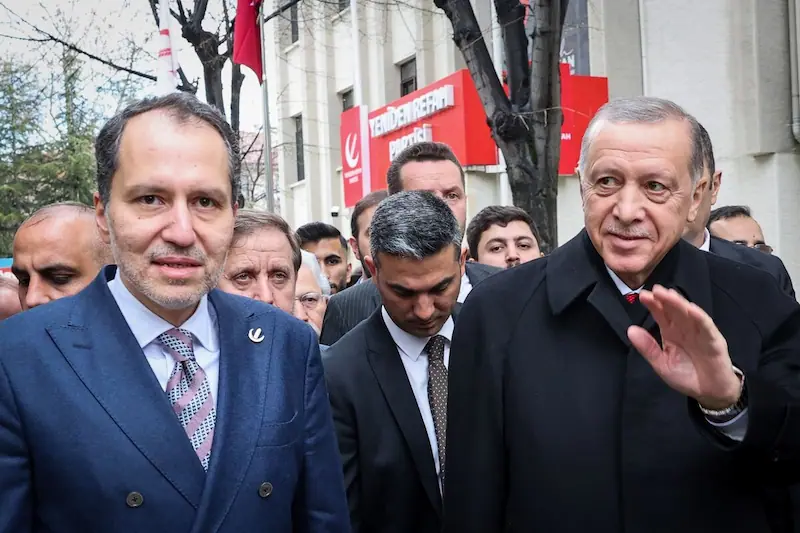


In a surprising turn of events, an Islamist ally who has now become a formidable rival poses a significant challenge for Turkish President Recep Tayyip Erdogan as he navigates the aftermath of a staggering defeat in local elections. The Islamist New Welfare Party, once a supporter of Erdogan, garnered over 6% of the vote in Sunday's polls but campaigned vigorously against Erdogan's AK Party this time around. This shift in allegiance played a crucial role in the resounding victories of the pro-secular opposition party, the Republican People's Party (CHP), in major cities like Istanbul, signaling a seismic political shift in Turkey.
Erdogan, at 70 years old, finds himself in a precarious position, not only contending with the resurgent CHP but also facing a challenge from within his own conservative base that has now thrown its support behind the New Welfare Party. The reasons for this shift in support include the party's vocal criticisms of Erdogan's government for not taking a stronger stance against Israel amid the conflict with Hamas in Gaza, as well as highlighting economic hardships and allegations of corruption.
The New Welfare Party, led by Fatih Erbakan, son of Turkey's first Islamist prime minister, has emerged as the voice of discontent among devout Muslims who denounce the government's economic policies and its perceived lack of action on key issues. Despite pressure to reduce trade with Israel and combat inflation, Erdogan's government has remained steadfast in its approach, further fueling the disillusionment among his base.
As Erdogan grapples with the aftermath of the election setback and the deepening economic crisis, he faces the daunting task of consolidating his authority and securing the necessary parliamentary support to extend his rule. With a shortfall of 46 lawmakers to trigger a referendum on a new constitution, Erdogan may need to make strategic alliances with smaller parties like Iyi Party, Saadet, and Deva to bolster his position within the parliament.
In the wake of the election defeat, Erdogan has pledged to reassess his party's policies and make necessary changes to rebuild public trust. This may involve reshuffling key members of the government, focusing on local initiatives to reconnect with voters, and doubling down on efforts to tackle the economic challenges facing the country. The president's commitment to maintaining current economic policies under Finance Minister Mehmet Simsek reflects his determination to address inflation and kickstart a much-needed recovery.
As Erdogan embarks on this journey of self-assessment and recalibration, the political landscape in Turkey remains in flux, with the dynamics between traditional allies and newfound rivals shifting rapidly. The coming months will prove crucial for Erdogan as he seeks to regain lost ground, restore confidence in his leadership, and navigate the complexities of a changing political landscape.