


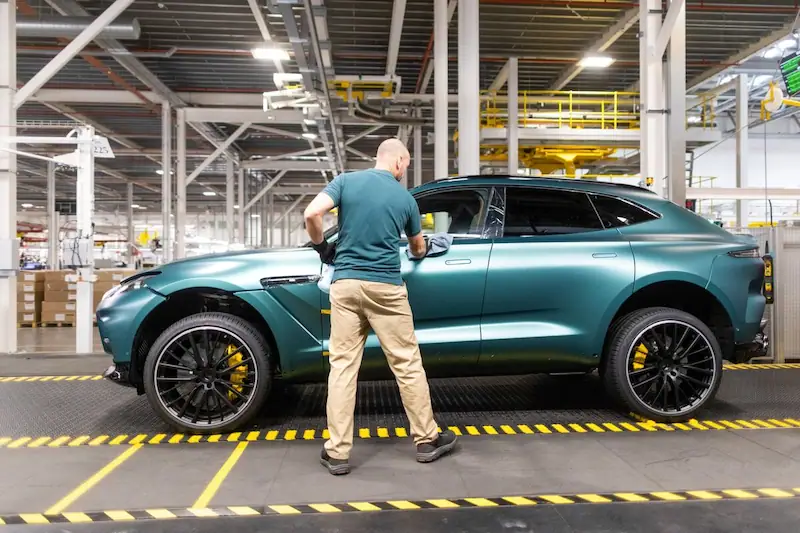


In February, investors were buoyed by news that Aston Martin, the iconic carmaker favored by James Bond, was in talks with bankers to address its looming debt crisis. The company, like many others that issued junk bonds when borrowing was cheap, faced a significant maturity wall, where refinancing debt at higher interest rates threatened its financial stability. However, a positive shift in the market dynamics has helped companies like Aston Martin navigate this hurdle.
The concept of a maturity wall arises when a company must refinance a significant amount of debt at higher costs simultaneously. This scenario became increasingly worrisome for junk-rated companies in 2023, with over $750 billion in bonds coming due. Aston Martin, a company that has struggled with losses and a weak balance sheet, faced a particularly challenging situation with a $1.1 billion bond maturing in 2025.
The market landscape shifted unexpectedly as inflation rates began to decline in 2023, prompting central banks to halt rate hikes and consider rate cuts. This change led to a reduction in refinancing costs, making it more affordable for companies to raise new capital. As a result, the looming maturity wall for junk-rated firms started to crumble, with near-term debt obligations decreasing significantly.
Aston Martin, under the leadership of Canadian billionaire Lawrence Stroll, managed to secure $960 million through a new bond issuance, effectively pushing back the repayment deadline to 2029. While the interest rates remained relatively high, the move bought the company time to enhance its business operations and turn its fortunes around.
Despite the temporary relief provided by delaying debt repayments, concerns remain about the sustainability of companies surviving on extended debt arrangements. The concept of "zombie" firms, propped up by constant refinancing with no substantial improvement in their fundamentals, continues to be a topic of discussion. While the current market conditions have allowed for a reprieve in debt pressures, the long-term implications of prolonging the financial struggles of such companies raise questions about the viability of these practices.
Looking ahead, the ongoing influx of cash into credit markets, expected rate cuts by central banks, and stable economic conditions may continue to ease the burden on companies facing maturity walls. However, the underlying issue of zombie firms and the potential for future financial instability loom large in the background, emphasizing the need for sustainable business practices and long-term financial health.