


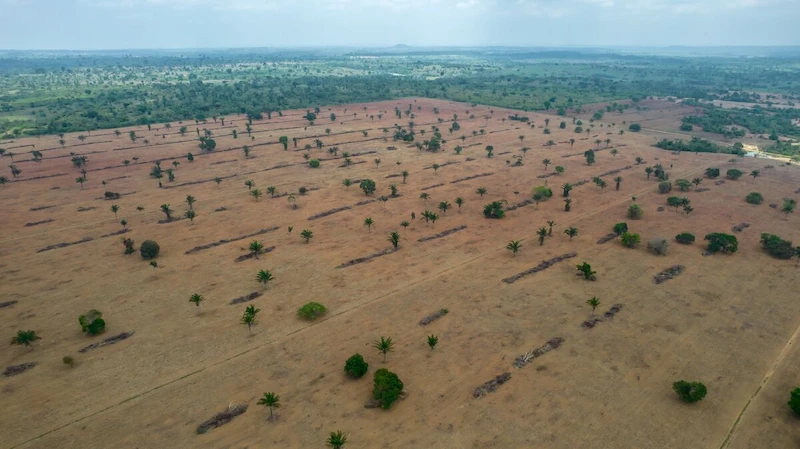


A labor dispute within Brazil's environmental regulatory agencies is causing significant disruptions to the country's economy. The ongoing protests by government employees over staffing shortages and low wages are affecting major oil and mining projects, as well as causing imported cars to pile up at ports. These issues also threaten President Luiz Inacio Lula da Silva's efforts to combat rampant deforestation in the Amazon rainforest, a crucial policy for Brazil's international credibility.
The top environmental agency, Ibama, and the Chico Mendes Institute for Biodiversity Conservation have significantly reduced field inspections aimed at curbing illegal activities such as deforestation and mining on Indigenous lands. Additionally, the issuance of new environmental permits necessary for infrastructure and industrial projects has been halted, leading to delays in key initiatives that are vital for boosting Brazil's GDP and advancing its green transition.
Major oil companies like Petrobras, BP, and Equinor are experiencing lengthy delays in obtaining permits for exploration and drilling activities. In the power sector, multiple energy projects, including thermoelectric plants, wind farms, transmission lines, and gas pipelines, are stuck waiting for permits. Even mining projects led by Vale, one of the world's largest iron ore producers, are facing slowdowns. The backlog of 16,000 imported cars at ports due to clearance delays further underscores the impact of the labor dispute on economic activities.
The staff shortages at Ibama and the Chico Mendes Institute are a central issue in the dispute, along with salary discrepancies compared to other federal agencies. Currently, only around 700 civil servants are responsible for inspections across all of Brazil's biomes, with the legal Amazon alone being as vast as Western Europe. The strain on these agencies has led to a shift towards internal bureaucratic work, further hampering field activities essential for environmental protection.
Efforts to resolve the labor dispute have been ongoing, with the latest round of talks between the government and workers' representatives yielding no significant breakthrough. The disruption caused by the partial work stoppage at Ibama has already cost the country billions in revenue and impacted sectors like oil and gas, mining, and automotive industries. The potential cascading effects on production, logistics, and foreign trade highlight the urgency of resolving the dispute to prevent further economic repercussions.
As President Lula's administration seeks to prioritize environmental preservation and sustainability on the international stage, the labor issues within Brazil's environmental agencies pose a critical challenge. The sharp decline in enforcement actions against environmental violations since the start of the dispute raises concerns about the resurgence of deforestation and environmental crimes. With Brazil's crucial role in climate action and biodiversity conservation, finding a resolution to the labor dispute is imperative to uphold environmental integrity and economic stability.