


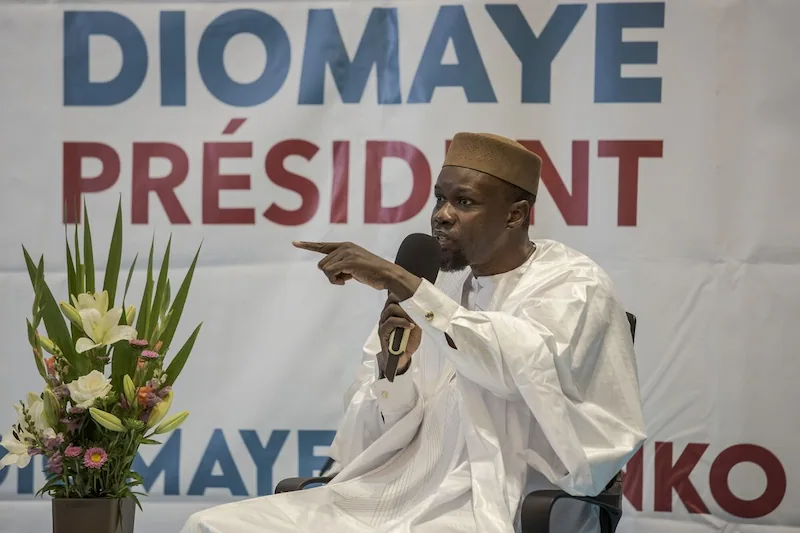


In his first cabinet appointments, Senegal's Prime Minister Ousmane Sonko has made a strategic decision to prioritize expertise over political experience. The new government lineup, unveiled in a televised address from the presidential palace, includes two former tax collectors at the helm of key ministries, signaling a commitment to effective governance and resource management.
Former Vice President of Sonko's dissolved Pastef party, Birame Souleye Diop, has been named as the Minister of Oil, Energy, and Mining. Alongside him, Cheikh Diba, a seasoned tax official who previously served as the finance ministry's Director of Budget Programming, takes on the crucial role of Finance Minister. Both appointments underscore the emphasis on skilled personnel to navigate the complexities of these vital sectors.
Additionally, the appointment of Abdourahamane Sarr as the new Economy Minister reflects a strategic choice to leverage expertise for economic reform. With a background as a senior economist at the International Monetary Fund and a specialist in monetary policy, Sarr's appointment signals a commitment to financial stability and sustainable growth strategies.
The new government's mandate aligns with Sonko's vision of transforming Senegal's economic landscape, particularly as the country prepares for substantial growth driven by offshore oil and gas projects. With the potential for significant exports in the energy sector, the cabinet's focus on economic sovereignty and reducing the cost of living resonates with the aspirations of the Senegalese population.
President Bassirou Diomaye Faye's recent call for an audit of oil, gas, and mining contracts underscores the government's commitment to transparency and accountability in the management of national resources. As Senegal positions itself for increased participation in the regional economy, the emphasis on good governance and prudent resource utilization is paramount.
Overall, the composition of the new cabinet reflects a blend of diverse expertise and political affiliations. Noteworthy appointments include Ousmane Diagne to lead judicial reforms, Yacine Fall as Foreign Minister, and military officials Jean Baptiste Tine and Birame Diop as Interior and Defense Ministers, respectively. The absence of posts for the Senegalese Democratic Party, which supported Faye in the elections, highlights a shift towards a more inclusive and merit-based approach to governance.
As Senegal enters a new chapter under the leadership of Prime Minister Sonko, the focus on expertise, economic reform, and resource management sets a promising trajectory for the country's development. With a strong foundation of skilled professionals at the helm, the government is poised to address key challenges and seize opportunities for sustainable growth and prosperity.