


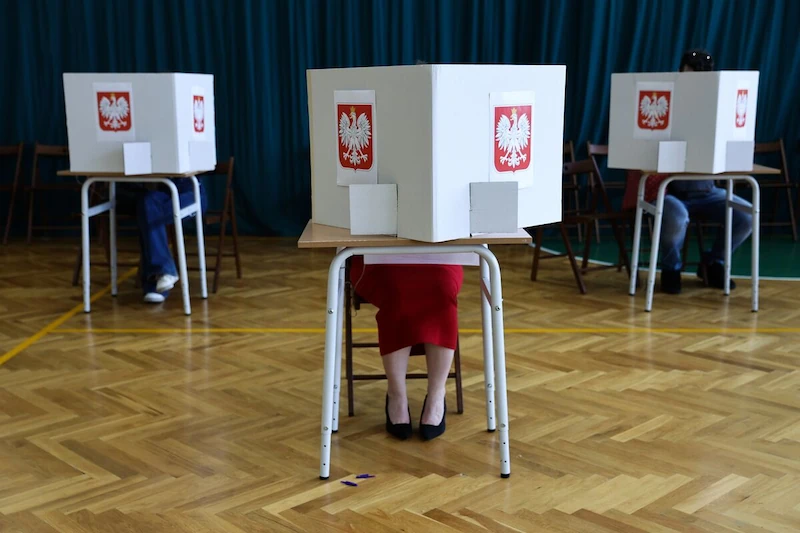


In a closely-watched set of local elections in Poland, Prime Minister Donald Tusk's coalition managed to secure victories, but fell short of delivering a decisive blow to the former ruling nationalists. The results, based on an exit poll conducted by Ipsos, showed that Tusk's three-way alliance collectively garnered 52.5% of the vote for regional assemblies. While this solidifies Tusk's hold on power in the country, it also underscores the resilience of the Law & Justice party, which remained the most popular individual group with 33.7% support.
The outcome of these elections serves as a significant test for Tusk's four-month-old government, following their victory in the parliamentary elections last year. The nationalist Law & Justice party, despite losing power, remains a potent force in Polish politics, maintaining its stronghold and posing a formidable challenge for Tusk's coalition. The election results indicate that the political landscape in Poland continues to be polarized, with populist forces remaining strong in the region.
Tusk, addressing his supporters after the results were announced, acknowledged the challenges ahead, stating that while the coalition repeated its success from the previous election, the path forward will not be an easy one. The coalition's victory in these local elections is seen as a validation of their pro-EU stance and their efforts to address concerns related to the rule of law and democratic standards.
However, tensions within the ruling alliance have surfaced, with disagreements over various issues, including support for abortion, creating divisions within the coalition. The leader of the Third Way party, part of Tusk's alliance, referred to the election results as a "warning sign" for the ruling coalition to focus on governance and unity rather than internal conflicts.
The Polish local elections also reflect the broader political landscape in the region, with neighboring countries like Slovakia and Hungary witnessing similar dynamics. The rise of populist and nationalist sentiments continues to shape politics in Eastern Europe, highlighting the challenges faced by pro-EU forces in maintaining their influence.
As official results are awaited and run-off elections scheduled in cases where no candidate secured a majority, the political future of Poland hangs in the balance. The results of these local elections will likely impact the upcoming presidential election, with Tusk ally Rafal Trzaskowski expected to run for office. Amidst evolving political dynamics and shifting allegiances, Poland navigates a complex political terrain, where the echoes of past rivalries and the aspirations for a European future converge.