




In response to the ongoing political turmoil in Bulgaria, President Rumen Radev has taken the decisive step of appointing an interim cabinet. This interim government has been tasked with preparing the Balkan country for a snap election scheduled to take place in June, marking the sixth such ballot in just over three years.
The root of Bulgaria's current political crisis can be traced back to the failure of the two largest political parties to renew their coalition agreement. This agreement, which had been in place for nine months, was crucial in ensuring the stability of the government. Former prime ministers Boyko Borissov and Kiril Petkov, despite their differences, had previously come together to form a government aimed at breaking the cycle of repeated elections since 2021. However, disagreements over administrative roles and reform initiatives eventually led to the collapse of the coalition.
The collapse of the coalition government has had far-reaching consequences, particularly in terms of Bulgaria's aspirations to join the Eurozone and access funding from the European Union. The inability to form a stable majority government has hampered the country's progress on these fronts, leaving Bulgaria in a state of uncertainty.
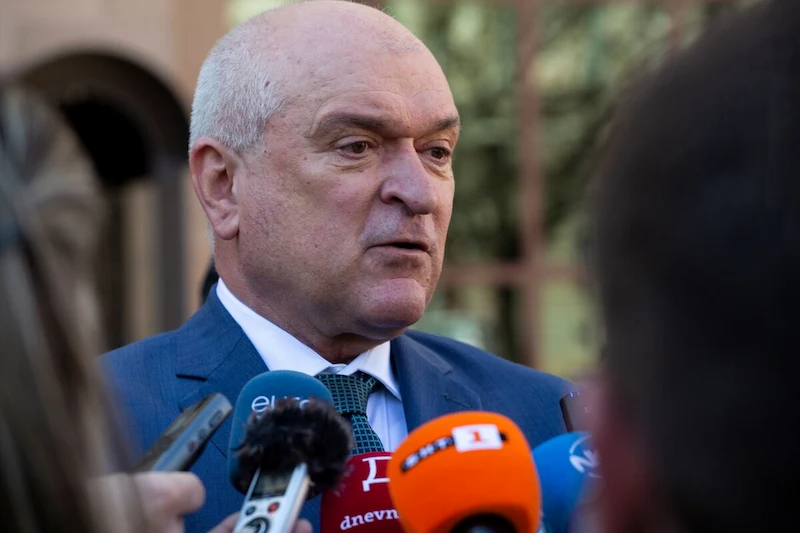
To navigate the country through this period of uncertainty and to pave the way for a new government, President Radev has appointed Dimitar Glavchev as the interim prime minister. A seasoned politician, Glavchev, who previously served as parliament speaker and head of the National Audit Office, will be responsible for overseeing the organization of the snap election scheduled for June 9. This election, which will coincide with the European Parliament ballot, holds the key to determining Bulgaria's political future and charting a path towards stability and progress.