


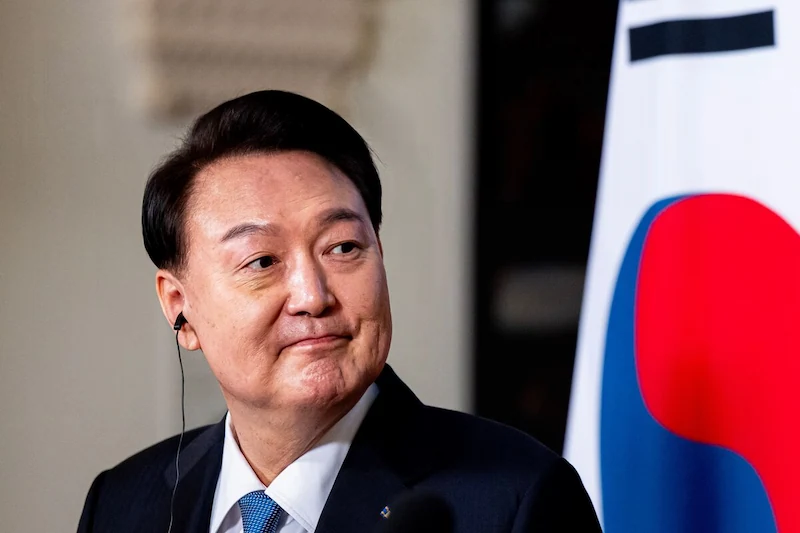


In a significant blow to South Korean President Yoon Suk Yeol's conservative alliance, the voting for a new parliament has dealt a major setback, leaving him in a vulnerable position for the remainder of his term and potentially hindering his pro-business policies. The conservative People Power Party-bloc, led by Yoon, is projected to secure only 87 to 105 seats in the 300-seat National Assembly, as per a joint exit poll by national broadcaster KBS. In contrast, the progressive Democratic Party-bloc is expected to strengthen its majority to 178 to 196 seats, signaling a shift in political power.
With a voter turnout estimated at 67%, the highest in over three decades, the results point to a clear mandate favoring the Democratic Party-led bloc. This outcome could thwart Yoon's policy agenda, which includes deregulating businesses, confronting labor unions, and cutting taxes on real estate transactions. The potential expansion of the Democratic Party's majority may enable them to block key conservative initiatives and even potentially challenge Yoon's government through constitutional amendments and impeachment measures.
Yoon's narrow victory in the 2022 presidential race seems to have failed to translate into broader support, as evidenced by the disappointing results in the parliamentary elections. Political observers suggest that Yoon's focus on wielding presidential power rather than building a broad support base may have contributed to the challenging electoral landscape for the conservative bloc. The inability to appeal to centrist voters has left Yoon facing an uphill battle in advancing his policy priorities.
The projected parliamentary outcomes raise concerns over the fate of Yoon's proposed policies, such as the elimination of the capital gains tax on financial investments and the "Corporate Value-Up" program aimed at boosting stock valuations. These initiatives, integral to Yoon's economic agenda, may face hurdles without sufficient support in the National Assembly. The market response to the election results, with stocks and the South Korean won already showing signs of retreat, underscores the implications of a potential policy gridlock.
On the opposing front, the Democratic Party's agenda, including plans for cash handouts and increased taxation on the wealthy and conglomerates, appears poised for advancement with an expanded majority. The emergence of Cho Kuk's new party aligning with the progressive bloc adds another dimension to the political landscape, potentially strengthening the bloc's ability to enact impeachment proceedings. Cho's comeback, despite past controversies, signals a shift in dynamics within the South Korean political sphere.
As the dust settles on the parliamentary elections, the focus shifts to addressing key issues like inflation, housing affordability, and economic revitalization. The outcome of the vote comes against the backdrop of a contentious dispute with trainee doctors and the broader economic challenges facing South Korea's export-driven economy. With the parliamentary term spanning four years, the election results are poised to shape the country's trajectory in the realms of governance and policy for the foreseeable future. Yoon's foreign policy initiatives, largely unaffected by parliamentary dynamics, continue to chart a course marked by security cooperation and firm stances on regional geopolitics.