


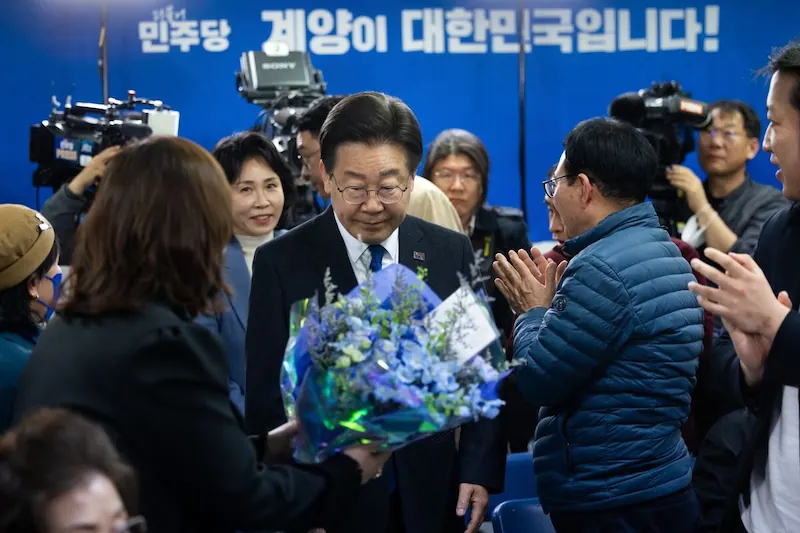


In a stunning turn of events, the recent triumph of South Korea's main opposition party in parliamentary elections has propelled its leader, Lee Jae-myung, into the spotlight as a formidable contender for the presidency in 2027. However, Lee's path to potential leadership is fraught with challenges, from managing public perception to navigating a looming legal battle that could potentially land him in prison before he even reaches the presidential race.
Lee Jae-myung's Democratic Party secured a strong majority in the elections, granting the progressive bloc considerable influence over legislation and the ability to apply pressure on the ruling People Power Party for concessions. Embracing a progressive agenda, Lee has advocated for a universal basic income and proposed substantial cash handouts to stimulate the economy, funding which would come from increased taxes on the wealthy and powerful chaebol conglomerates.
This electoral victory marks a significant turnaround for Lee, who narrowly lost the presidential race in 2022 and faced indictment on charges of bribery and breach of duty. Despite internal party concerns over potential damage to the party's reputation, Lee's ability to resonate with voters was evident in the recent election results, solidifying his grip on power within the Democratic Party.
Political analysts, such as Shin Yul from Myongji University, note that Lee's adept leadership has consolidated his influence within the Democratic Party while appealing to moderate voters. Despite facing legal scrutiny and personal scandals, Lee's ability to connect with a discontented electorate seems to have overshadowed these issues, paving the way for his potential presidential bid in the future.
With the Democratic Party bloc securing a majority of 175 seats, Lee now stands poised to position himself as a frontrunner for the presidency. A former factory worker turned civil rights lawyer, Lee has long been an advocate for progressive policies, including his ambitious push for a universal basic income and a strong stance against corruption and inequality.
However, Lee's political journey is not without hurdles, as he faces ongoing legal battles stemming from allegations of corruption and land speculation during his tenure as mayor of Seongnam. Despite his steadfast denials of any wrongdoing and claims that the legal actions against him are politically motivated, the shadow of these legal challenges looms large over his political aspirations.
As Lee continues to navigate the complexities of his legal battles and ambitious policy agenda, he is also faced with the emergence of other political figures, such as Cho Kuk, a former justice minister who launched a new party ahead of the elections. Cho's party, which secured 12 seats, presents a new player in the political landscape, potentially influencing the trajectory of legislation and the balance of power within parliament.
In the midst of these challenges and uncertainties, South Korea finds itself at a crucial crossroads, where the choices and actions of political leaders like Lee Jae-myung and Cho Kuk will shape the future direction of the country. The recent election results serve as a compelling indicator of the complex dynamics at play, reflecting a diverse range of perspectives and interests that will continue to shape the political landscape in the years to come.