


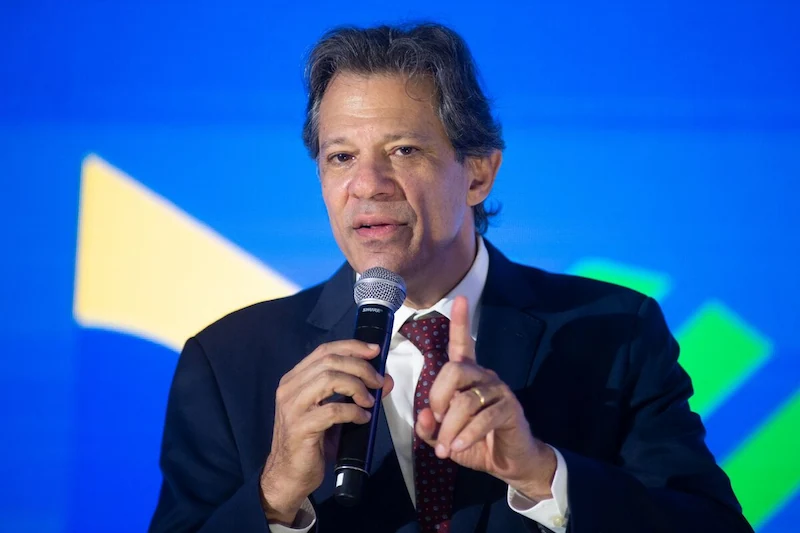


In a significant shift from previous indications, Brazil's Finance Minister Fernando Haddad announced that the government will be targeting a balanced primary budget for the year 2025, deviating from the previously projected surplus of 0.5% of GDP. This adjustment, set to be included in the official budget guidelines proposal sent to Congress on Monday, reflects a more conservative approach to fiscal outcomes that may disappoint investors seeking stronger signals of effective spending control and deficit management.
The Brazilian real plunged 1.6% against the dollar on Monday, marking its lowest level since October. This market reaction underscores the impact of the government's revised fiscal targets on investor confidence and the country's currency stability.
President Luiz Inacio Lula da Silva’s administration faces the challenge of balancing the imperative for increased spending to sustain economic growth with Finance Minister Haddad's agenda of fortifying public finances. With the economy poised for a slowdown and demands for greater expenditures looming, the government is navigating a delicate balance between meeting societal expectations for improved living standards and the imperative of fiscal discipline.
Despite skepticism from the financial market, Minister Haddad has demonstrated some success in revenue generation, with the country recording a record 467 billion reais ($90 billion) in tax collections over the first two months of the year. However, as tax income shows signs of tapering off, concerns arise regarding the government's ability to uphold its zero-deficit target for the current year, potentially necessitating revisions to fiscal targets in the near future.
Looking ahead, the economic team's projections hint at a 0.1% of GDP deficit for 2024, aligning with spending rules established in the preceding year. Nevertheless, market expectations paint a different picture, with analysts forecasting primary deficits of 0.7% of GDP in 2024 and 0.6% in 2025, as per the central bank's most recent survey of economists.
Adding to the complexity, Brazil's upcoming elections for key positions in Congress at the start of next year add further uncertainty to the fiscal landscape. Government officials express apprehension that the electoral dynamics could impede necessary approvals for crucial fiscal adjustments amidst the shifting political landscape.
Minister Haddad emphasized the government's commitment to bolstering revenues during the interview, underscoring ongoing efforts to navigate the intricate interplay between economic priorities, fiscal targets, and political considerations in Brazil's evolving financial landscape.