


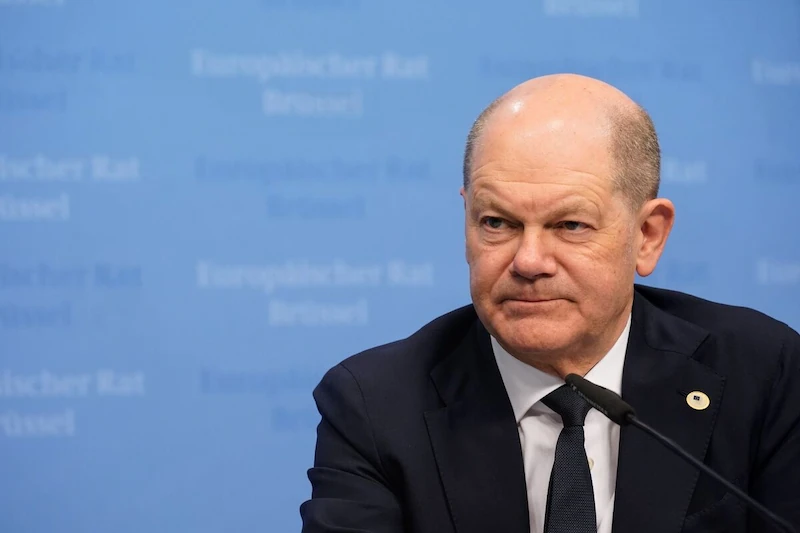


German Chancellor Olaf Scholz painted a positive picture of his country's economic outlook, emphasizing strong employment figures and a slowdown in inflation due to decreasing energy prices. Speaking at a trade fair in Hanover, Scholz highlighted the noticeable production increase in energy-dependent sectors since the beginning of the year, which has also positively impacted the overall industry. He pointed to potential interest rate cuts by the European Central Bank, the rising benchmark DAX Index, and growing confidence among German businesses and consumers as further indicators of economic optimism.
Scholz also pointed out that despite inflation and a temporary production decline, the real gross value added in the industry has remained stable. This resilience, he noted, underscores the enduring contribution of German industry to economic growth, prosperity, and employment. The Bundesbank's recent acknowledgment that the German economy likely avoided a winter recession, supported by improved manufacturing, rising exports, and increased construction activity at the start of the year, further reinforces the positive economic narrative.
Upcoming data releases, including monthly purchasing manager surveys and the Ifo business sentiment index, are expected to confirm this positive trend. However, despite the potential economic turnaround, Scholz's Social Democrats have not seen a corresponding boost in electoral support. The latest polls show the party trailing behind the Christian Democrats and the far-right Alternative for Germany, indicating a challenging political landscape for the ruling coalition, which also includes the Greens and the Free Democrats.
In an effort to regain voter confidence, Scholz detailed plans to extend the power price brake scheme beyond 2027 and suggested that the next growth package could include additional tax incentives for research and development. As Germany navigates a complex economic landscape amidst global uncertainties, Scholz's optimism and proactive approach to economic policy may play a crucial role in shaping the country's future growth and stability.