


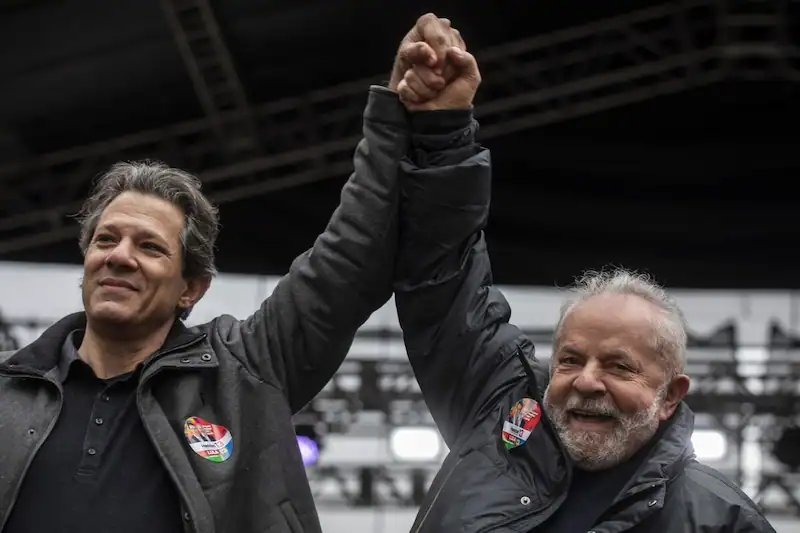


Emerging from the confines of prison to reclaim the presidency, Luiz Inacio Lula da Silva of Brazil has consistently leaned on one steadfast ally in times of need: Fernando Haddad, his chosen successor and finance minister. Haddad, a key figure in Lula's political circle, has been instrumental in navigating the country's fiscal challenges, bridging the gap between demands for austerity and calls for increased public spending.
Yet, Haddad's resolve faces its toughest challenge yet as Brazil's fiscal outlook appears increasingly uncertain. Last week, a revision in the government’s primary 2025 budget target signaled that Haddad's efforts to bolster public accounts without deep spending cuts may be falling short. The adjustment, coming amidst global financial turbulence spurred by the US Federal Reserve's policy shifts, has rattled Brazilian markets, causing strains on the country's economic landscape.
Despite the market's apprehension, Haddad retains Lula's support, a crucial factor in navigating the delicate balance between fiscal discipline and social welfare promised by the Workers’ Party. Their dynamic, forged during Lula's imprisonment, has seen Haddad emerge as a key player in the administration, often aligning with Lula's vision amidst internal party discord. As the primary conduit to Lula within the cabinet, Haddad's influence is unmatched, fostering a relationship that is pivotal in shaping Brazil's economic trajectory.
Nevertheless, Haddad faces resistance from factions within the party advocating for a more traditional invest-to-grow approach. As economic projections remain sluggish and pressure mounts to stimulate growth, Haddad finds himself at a crossroads, torn between fiscal prudence and the urgent need for economic revival. The recent target adjustment has emboldened critics on the left, casting doubts on the efficacy of Haddad's economic strategy and intensifying calls for increased spending to jumpstart the economy.
Amidst these challenges, investors regard Haddad as a stabilizing force within the government, credited with steering Brazil towards a path of economic recovery. While concerns loom over potential strategic shifts, some analysts remain optimistic about Brazil's economic prospects, citing positive growth forecasts and improving indicators. The resilience of the economy, coupled with Haddad's credibility and Lula's steadfast support, may yet steer Brazil through its current fiscal turbulence, ushering in a new era of economic prosperity.