


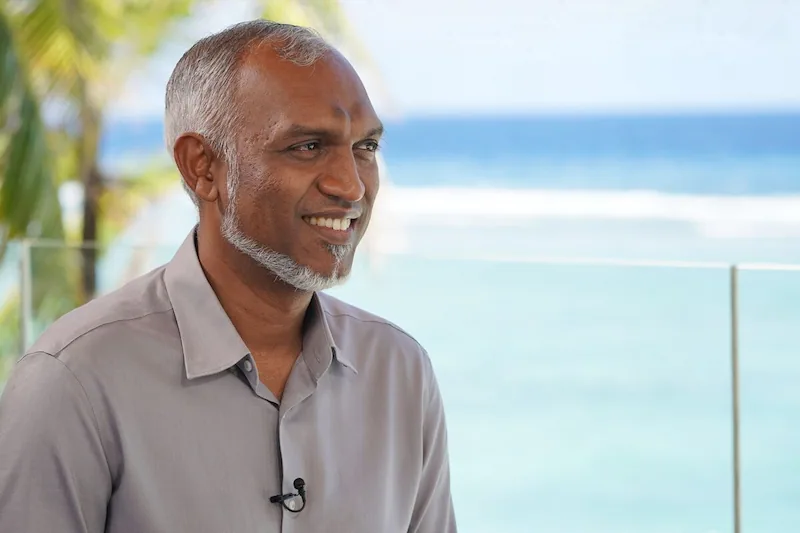


In a decisive electoral victory, the ruling People’s National Congress party in the Maldives secured an absolute majority in Sunday's parliamentary elections, solidifying President Mohamed Muizzu's pro-China stance. The outcome, with 71 out of 93 seats won by Muizzu’s party, marks a significant endorsement of his administration's policies and priorities. Conversely, the main opposition party, the Maldivian Democratic Party, clinched 12 seats, underscoring a clear mandate for the incumbent government.
President Muizzu, who emerged victorious in the presidential elections last year, has been vocal about reducing India's influence in the archipelago. One of his first actions upon assuming office was to request the withdrawal of Indian troops stationed on a strategic Maldivian islet. Following negotiations, New Delhi has agreed to withdraw its troops by May 10, signaling a shift in the regional power dynamics and geopolitical allegiances in the Indian Ocean.
During a pivotal five-day visit to China in January, President Muizzu further bolstered ties with Beijing, resulting in an elevation of diplomatic relations to a “comprehensive strategic cooperative partnership.” This deepening of ties saw China extending military assistance to the Maldives, pledging to enhance direct flights between the two nations, and committing to stronger collaboration in various sectors such as trade, investment, and agriculture. The strategic convergence between the Maldives and China underscores a notable realignment in the archipelago’s foreign policy, with implications for the broader Indo-Pacific region.
The electoral triumph of the People’s National Congress party not only affirms President Muizzu’s pro-China stance but also sets the stage for the implementation of his administration's vision for the Maldives. With a strengthened majority in parliament, Muizzu is in a favorable position to advance his agenda, which includes further diversifying the country's foreign relations, boosting economic cooperation, and enhancing infrastructure development. As the Maldives navigates these shifting geopolitical currents, the outcome of the parliamentary elections is poised to shape the nation's trajectory in the coming years, reflecting evolving dynamics in the strategic landscape of the Indian Ocean region.