


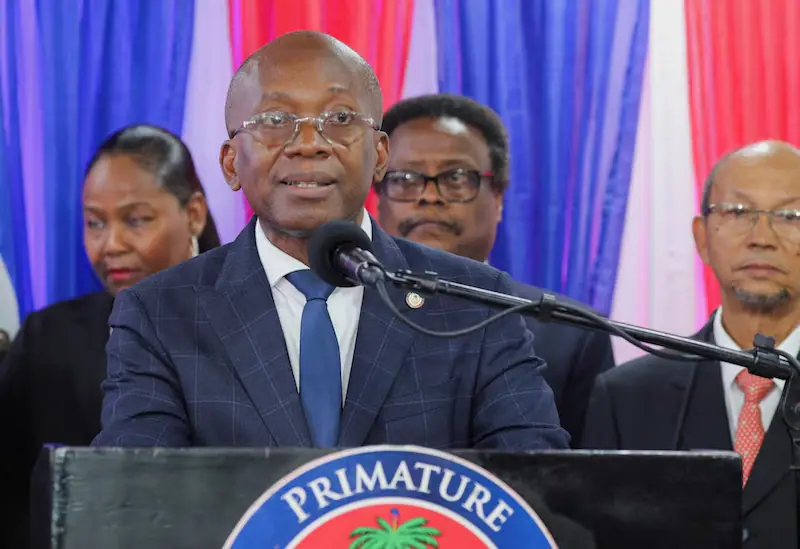


In a significant development aimed at restoring stability in Haiti amidst the chaos caused by gang violence, Prime Minister Ariel Henry stepped down on Thursday. Following his resignation, a transitional council assumed power with a clear objective of bringing calm to a nation plagued by insecurity and suffering. The interim Prime Minister, Michel Patrick Boisvert, promised a path towards resolving the multidimensional crises that have gripped the country.
The transitional council, comprising nine members, was formally sworn in on Thursday morning at the prime minister's office, Villa d'Accueil. Surrounded by military and security personnel, Boisvert emphasized the importance of this moment for the Haitian republic. With key police and military officials standing behind him, Boisvert acknowledged the challenges ahead but expressed determination in navigating the country towards a more stable future.
Having earlier announced his intention to resign once the transitional council was established, Henry's departure marked a significant step towards the country's political transition. His absence in Haiti, due to seeking international support against powerful gangs, underscored the gravity of the situation faced by the government. Boisvert, who had served as acting Prime Minister during Henry's absence, now assumes the role of interim leader in this pivotal moment for Haiti.
The mandate of the transitional government extends until February 2026, with the primary objective of organizing free and fair elections by that time. While the announcement of the transitional council assuming power was welcomed by the White House, acknowledging it as a step towards democratic processes, challenges lie ahead. Tensions within the council, as different factions vie for influence, may pose obstacles to the smooth functioning of the transitional government.
Addressing the dire security situation in Haiti, U.N. Secretary-General Antonio Guterres urged the swift deployment of a multinational security mission. With gang violence escalating earlier this year and causing widespread displacement and hunger, the need for international intervention is critical. The newly formed transitional council holds the key to implementing essential measures, including the appointment of key officials and the establishment of crucial commissions.
As the transitional council navigates the path towards elections and seeks to address the pressing security challenges, the support of the international community remains crucial. With a long and challenging road ahead, the council's ability to forge a united government and restore stability to Haiti will be closely watched by both Haitian citizens and the global community. Amidst uncertainties, the hope for a brighter future for Haiti rests on the shoulders of the transitional council and its commitment to rebuilding a nation in turmoil.