


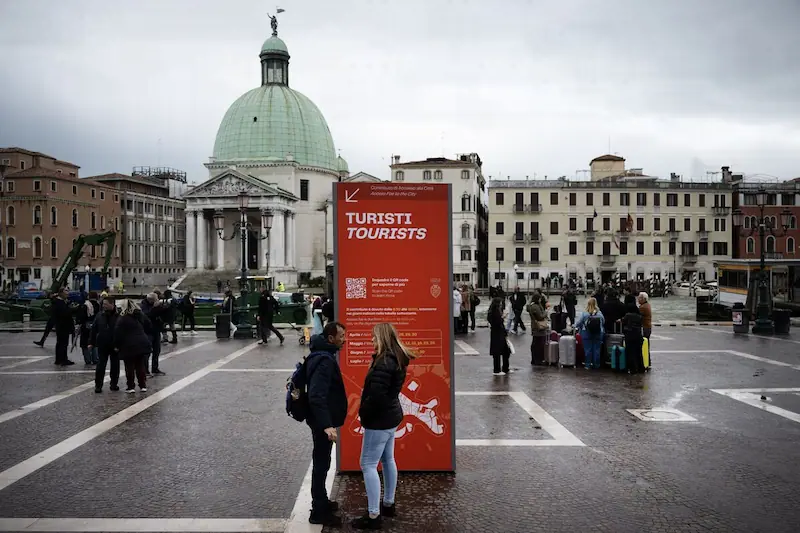


In a groundbreaking move, Venice has implemented a new fee for day trippers in an effort to address the ongoing challenges of overtourism in the city. This initiative, a first of its kind globally, is set to serve as a significant experiment in how cities can manage the delicate balance between catering to tourists while ensuring the well-being of residents.
Starting on a designated 29 days, primarily weekends until mid-July, visitors who do not reside, work, or study in Venice will be required to pay a 5 euro fee for entry between 8:30 a.m. and 4 p.m. However, overnight guests in hotels or registered accommodations will be exempt from this charge, as outlined by Venice Mayor Luigi Brugnaro. Those who fail to pay the fee may face fines ranging from 50 to 300 euros, with authorities underscoring that penalties are unlikely to escalate to imprisonment.
Protests have erupted in response to this new fee, with demonstrators expressing concerns about the city commercializing its heritage. Critics argue that addressing overtourism in Venice should involve improving existing services and housing options for residents rather than imposing additional fees on visitors, some of whom could be residents lacking proper documentation. The city faces challenges from a myriad of issues, including the impact of short-term rentals on housing availability and affordability.
Venice has grappled with overtourism for years, prompting the ban on large cruise ships in 2021 to alleviate the strain on the city's infrastructure. Despite efforts to limit tourist numbers, recent proposals to reintroduce cruise ships have sparked backlash from advocacy groups advocating for stricter regulations to protect Venice’s treasured heritage.
The trial run of the day-tripper fee will be closely monitored, with authorities planning to evaluate its effectiveness in managing visitor numbers. There is a possibility of implementing daily tourist caps in the future to mitigate the strain on the city’s resources and environment. As Venice continues to face challenges such as a declining local population and rising sea levels, sustainable tourism practices are essential to safeguarding the city’s unique cultural and ecological heritage.
While discussions on regulating tourist access began pre-pandemic, recent developments have accelerated the implementation of the fee system. The aim is not to bar visitors completely but to create a more sustainable and respectful tourism model that benefits both residents and tourists alike. Venice affirms its commitment to inclusivity while asserting the importance of preserving its cultural integrity and fragile ecosystem.