


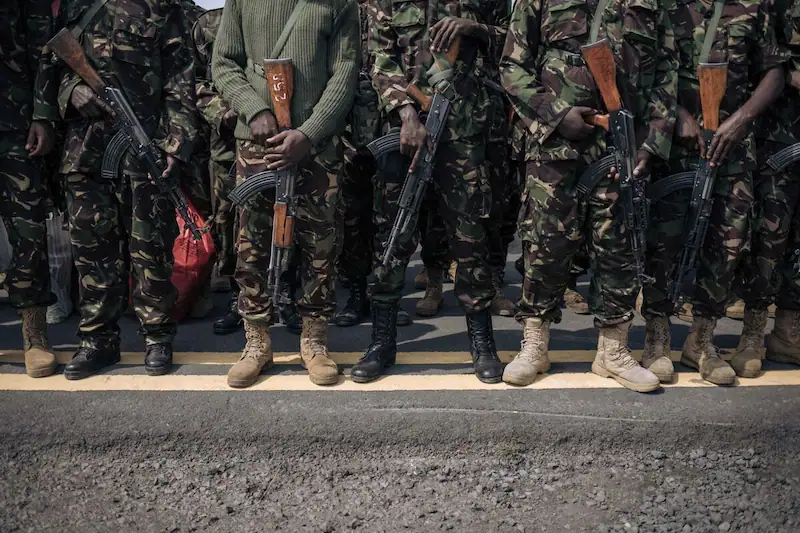


The Democratic Republic of Congo is facing a significant financial strain as it grapples with multiple conflicts in its eastern provinces, resulting in the displacement of over six million people. Nicolas Kazadi, the Finance Minister, disclosed in a press conference broadcasted nationally that a staggering 27% of the government's revenues in the first quarter of 2024 were allocated towards exceptional security-related expenses.
The primary focus of this substantial expenditure is directed towards combating the M23 rebel group, which the Congolese government accuses Rwanda of supporting. Despite Rwanda's denial of these allegations, the M23 group, purportedly championing the rights of ethnic Congolese Tutsis, currently controls a significant portion of North Kivu province, known for its vast mineral resources.
In stark contrast to the usual expenditure on security, which typically amounts to around 1% of the government's revenue, last year witnessed an unprecedented surge, with 22% of funds channeled into exceptional security measures. This year's surge to 27% highlights the pressing and escalating security concerns that the government is grappling with, leaving little room for other planned investments outlined in the ambitious 41 trillion-franc budget ($15 billion).
Finance Minister Kazadi emphasized the government's unwavering commitment to ensuring the security and stability of the nation, stressing that in the face of such security challenges, fiscal prudence and prioritization are imperative. These escalating security costs have necessitated a tightening of belts and a reevaluation of budget allocations as the government navigates the complex and pressing security landscape in the region.
As the Democratic Republic of Congo continues to confront these multifaceted security threats, the allocation of such a significant portion of its revenue towards security highlights the gravity of the situation and the government's resolve to overcome these challenges. The financial strain caused by these conflicts underscores the need for sustainable solutions that prioritize not only immediate security concerns but also the long-term stability and development of the country.