


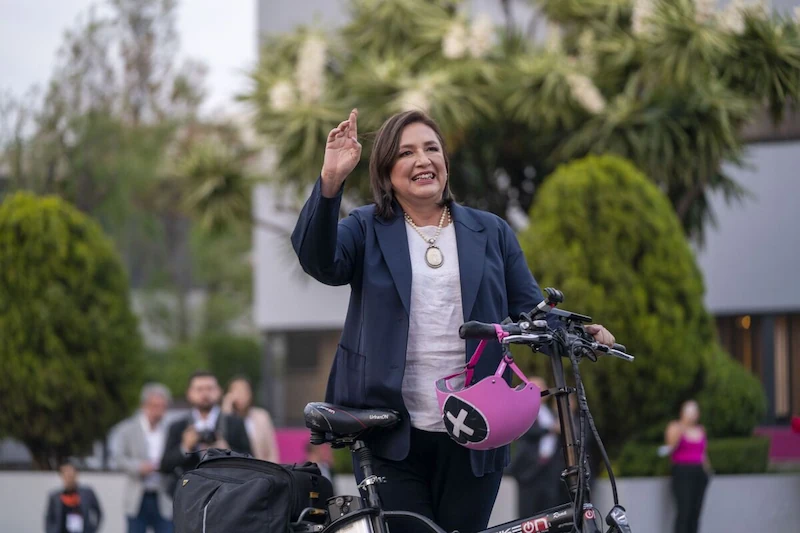


As the Mexican presidential election draws near, opposition candidate Xochitl Galvez faces a daunting challenge in closing the wide gap between her and the frontrunner, Claudia Sheinbaum. With just five weeks remaining until election day, Galvez is running out of opportunities to present herself as a serious contender against President Lopez Obrador's chosen successor.
Galvez, a senator known for her sharp criticisms of the current administration, initially gained attention and secured the support of three major opposition parties. However, her momentum has stalled, partly due to disorganized coalition strategies and her own missteps. The upcoming second debate against Sheinbaum on Sunday is one of Galvez's last chances to reset her image before a national audience.
Despite her current trailing position in polling data, Galvez's strengths may come into play during the debate. The discussion on economic growth, employment, and inflation could allow her to pitch herself as a pro-business candidate and highlight her critiques of Lopez Obrador's policies, particularly concerning the energy sector and security issues.
Galvez's unconventional approach, such as dressing as a dinosaur in the Senate to criticize the ruling party, has garnered attention but also drawn criticism. Some analysts question her political experience and ability to develop a coherent strategy compared to Sheinbaum, who served as the mayor of Mexico City.
Throughout the campaign, Galvez has emphasized her Indigenous and working-class background while distancing herself from the traditional political parties within the opposition coalition. Despite challenges in garnering unified support from these parties, Galvez's adviser, former Economy Minister Ildefonso Guajardo, believes she is the best candidate to attract foreign investment and address infrastructure shortcomings that may hinder economic growth.
As Galvez prepares for the second debate, she faces the task of connecting with viewers on a more personal level and delivering a message that resonates with voters. With the clock ticking down to the election, this pivotal moment could determine the trajectory of her campaign and reshape the narrative of the race for the Mexican presidency.