


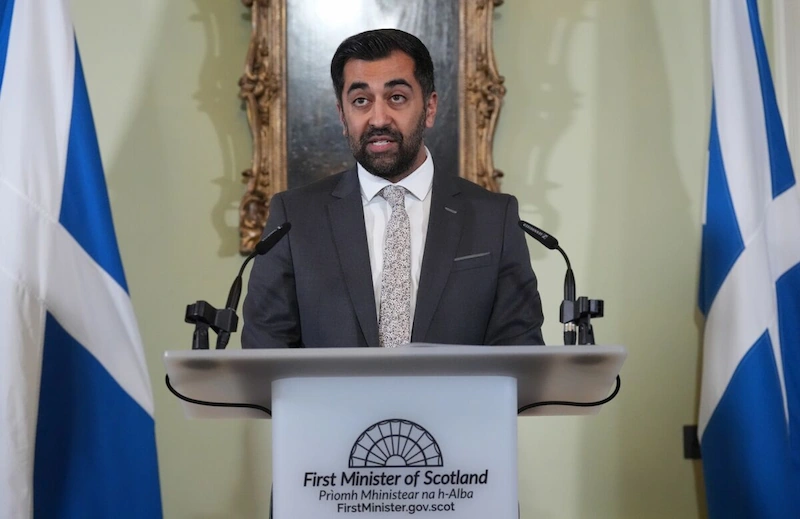


In a surprising turn of events, Humza Yousaf has announced his resignation as Scotland's first minister and leader of the Scottish National Party (SNP) after a little over a year in office. Yousaf made this decision following a failed gamble that led to the SNP pulling out of its power-sharing arrangement with the Scottish Greens, plunging the political landscape into chaos. The move, which was intended to demonstrate strength, instead highlighted Yousaf's vulnerability as he faced potential votes that could have forced him out of office.
Yousaf's departure signifies a significant setback for the SNP, a party that has prided itself on providing stable leadership amidst the uncertainties of Brexit and the pandemic. The repercussions of his resignation extend beyond the party itself, potentially leading to snap elections for the first time since the establishment of the Scottish parliament. With 28 days to select a new leader, the SNP must navigate a delicate political landscape to secure support and maintain its minority government status.
Potential candidates to succeed Yousaf include figures like Kate Forbes, John Swinney, Jenny Gilruth, Neil Gray, Mairi McAllan, and Stephen Flynn. However, the path forward for the SNP remains uncertain, with questions looming over whether opposition parties will support their continued governance or push for a snap election. The Green Party, former coalition partners, may hold the key to the SNP's future as negotiations to form a new government unfold.
Meanwhile, the Scottish Labour Party, buoyed by recent successes, eyes an opportunity to capitalize on the SNP's turmoil. As discussions around confidence votes and potential elections ensue, the broader implications for UK politics come into focus. The resurgence of Labour in Scotland could significantly impact the outcome of the upcoming UK general election and pose a challenge to Prime Minister Rishi Sunak's Conservative Party.
Yousaf's resignation marks a pivotal moment in Scottish politics, underscoring the fragility of political alliances and the complexities of governing in a divided landscape. As the SNP navigates this period of transition, the future of Scotland's leadership and its position within the broader UK political landscape hang in the balance.