


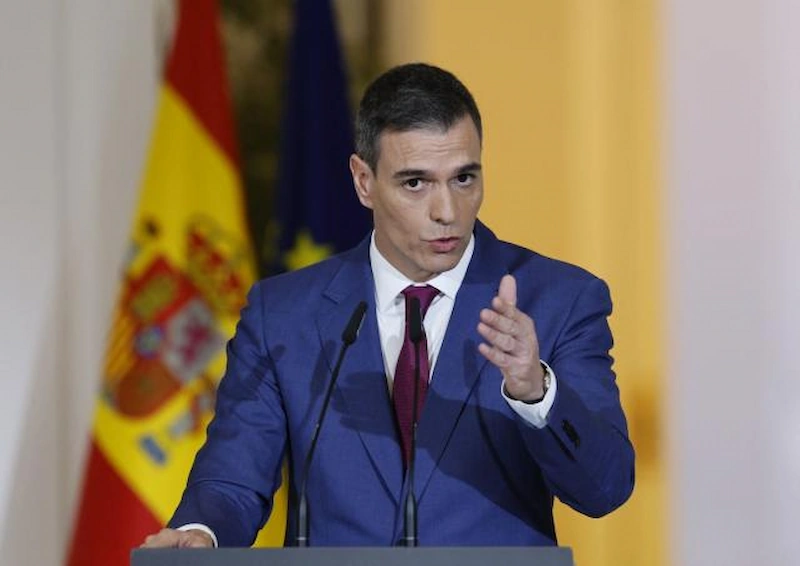


In a surprising turn of events, Spanish Prime Minister Pedro Sanchez has announced his decision to remain in office, quelling speculation about his potential resignation. Following a period of reflection prompted by a legal case involving allegations against his wife, Sanchez declared his intent to uphold democracy in a televised statement from his official residence in Madrid. The 52-year-old leader had previously hinted at stepping down after accusations of influence-peddling surfaced, which he attributed to a right-wing conspiracy targeting his family.
The timing and manner of Sanchez's announcement have raised questions among political observers, with critics quick to seize the opportunity to criticize his handling of the situation. Some have accused him of playing the victim, while others, like Madrid regional President Isabel Diaz Ayuso and opposition leader Alberto Nunez Feijoo, have condemned what they perceive as a high-stakes game that misled the nation.
The probe into Sanchez's wife's business dealings, initiated by a far-right anti-corruption organization, has highlighted the ongoing tensions between the government and sections of the judiciary in Spain. The prime minister and his administration have long been at odds with a judiciary they believe leans conservative and favors the center-right People's Party, leading to disputes over the impartiality of legal decisions.
Sanchez's decision to stay on as prime minister comes amid a critical period in Spanish politics, with regional elections in Catalonia scheduled for May 12. The upcoming vote holds significant implications for the country's political landscape, particularly in light of the ongoing separatist movement in the region. Sanchez's initial contemplation of resignation had disrupted the early stages of the campaign, forcing a reevaluation of strategies by political parties.
Despite overseeing economic growth in Spain since taking office in 2018, Sanchez has faced criticism for a rise in government debt and a lack of major reforms within his coalition. The country, set to receive substantial EU recovery funds, has struggled to capitalize on these resources due to legislative challenges. In his recommitment to leading the government, Sanchez emphasized his dedication to working tirelessly towards the regeneration of democracy, signaling a renewed focus on governance and political stability.