


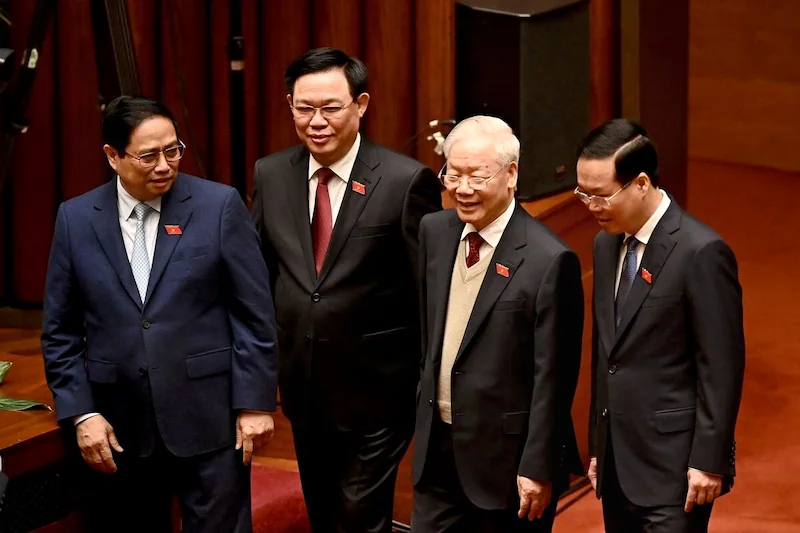


The National Assembly of Vietnam has called for an extraordinary session to address personnel matters following the resignation of its chairman, Vuong Dinh Hue. The Communist Party Central Committee accepted Hue's resignation on April 26, just days after his assistant was detained in connection with a corruption investigation. This development has raised significant concerns within the government and prompted the need for immediate discussion and action by the parliamentary body.
The upcoming meeting of the National Assembly, as announced by its standing committee, is expected to delve into the circumstances surrounding Hue's resignation and the implications it may have on the political landscape of Vietnam. The assembly, being the highest legislative body in the country, holds the authority to vote on the resignation of senior officials, including its chairman. This meeting will be crucial in determining the future leadership of the National Assembly and ensuring stability within the government.
Hue's departure coincides with a broader anti-corruption campaign led by General Secretary Nguyen Phu Trong, which has already seen numerous high-profile arrests and convictions. The recent arrest of Hue's assistant in connection with a corruption probe further underscores the seriousness of the issue and the government's commitment to rooting out corruption at all levels. The National Assembly's response to these developments will be closely watched both domestically and internationally.
This resignation also comes on the heels of other high-profile exits within the Vietnamese government, including the recent resignation of Vo Van Thuong as president. These successive resignations have raised questions about the accountability and integrity of government officials, as well as the effectiveness of current anti-corruption efforts. The National Assembly's special session will be a critical juncture in addressing these concerns and charting a way forward for Vietnam's political leadership.
As Vietnam continues to grapple with systemic corruption and the need for transparent governance, the outcome of the National Assembly's special meeting will be pivotal in determining the country's future trajectory. The decisions made in response to Hue's resignation will not only impact the leadership of the National Assembly but also signal the government's commitment to upholding accountability and integrity in public office. Amidst these challenging times, Vietnam's political landscape stands at a crossroads, with the National Assembly poised to steer the country towards a path of transparency and good governance.