


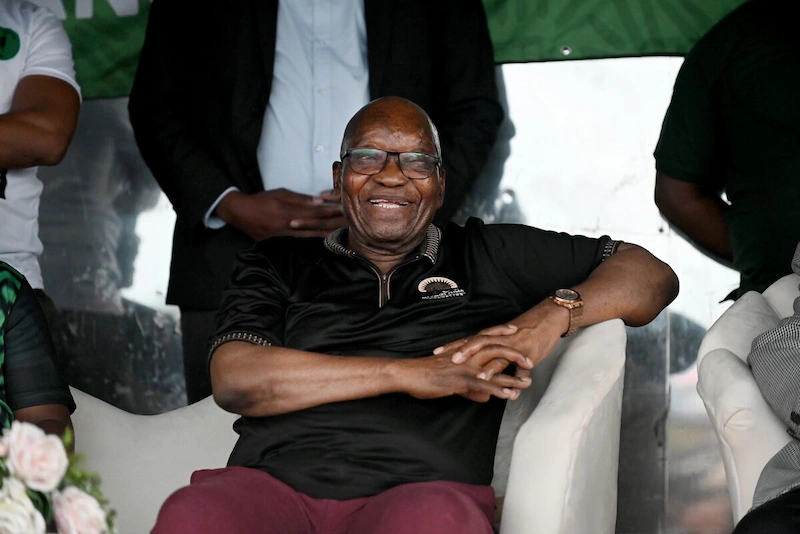


In a surprising turn of events, former South African President Jacob Zuma has made a remarkable comeback onto the political scene, poised to challenge the ruling party in the upcoming elections. Despite facing numerous corruption allegations during his presidency and a recent stint in jail for contempt of court, the charismatic 82-year-old is leading a new party called the uMkhonto weSizwe Party (MKP) with significant support in key regions like KwaZulu-Natal. This resurgence has the potential to reshape the political landscape in a country grappling with economic challenges and disillusionment with the current government.
Zuma's return to the spotlight has sparked both intrigue and concern among voters and analysts. While his leadership was marred by corruption scandals and mismanagement, his continued influence in KwaZulu-Natal, where he enjoys a loyal following, cannot be underestimated. The MKP's campaign promises, including nationalizing banks and mines, land expropriation without compensation, and expanding social welfare programs, have resonated with many disillusioned voters looking for change.
Despite skepticism from some quarters about the MKP's electoral prospects, opinion polls suggest that Zuma's party could secure a significant number of seats in parliament and provincial legislatures. This potential shift in political dynamics has raised alarms among foreign investors and the business community, who fear instability and radical policy shifts under a new government led by the MKP or other opposition parties.
Zuma's political career has been a rollercoaster ride, from his days as a freedom fighter against apartheid to his controversial tenure as president, marked by allegations of corruption and abuse of power. The judicial inquiry into state capture revealed the extent of corruption under his watch, tarnishing his legacy and leading to his conviction for contempt of court in 2021. Despite these setbacks, Zuma remains a polarizing figure, drawing crowds of supporters to his rallies and challenging the dominance of the ruling African National Congress (ANC).
As the election draws near, the ANC and other political parties are closely watching Zuma's resurgence and the potential impact on the electoral landscape. While the prospect of a fragmented government with smaller parties holding the balance of power raises concerns about governance and policy coherence, it also reflects a growing demand for change and accountability among South African voters. The upcoming elections will test the country's democratic institutions and set the stage for a new chapter in South Africa's political history.
In conclusion, Jacob Zuma's unexpected return to the political stage has injected a new level of excitement and uncertainty into South Africa's upcoming elections. Whether his party can translate popular support into tangible electoral gains remains to be seen, but one thing is certain: Zuma's comeback has reignited debate about the country's future direction and the role of political leaders in addressing pressing economic and social challenges. As South Africans head to the polls, the legacy of Zuma's presidency and the promise of a new political era hang in the balance.