


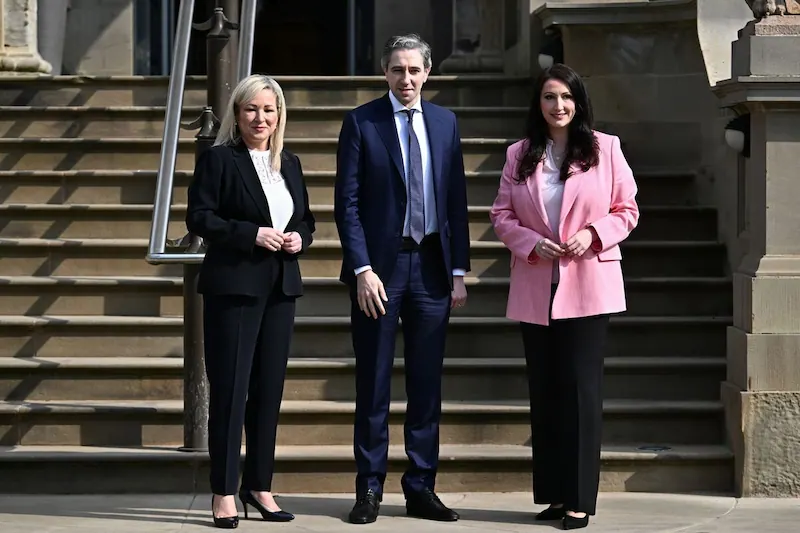


Irish Prime Minister Simon Harris is set to make his inaugural official visit to Belfast in Northern Ireland, marking a significant diplomatic move amidst a mounting dispute between the UK and Ireland concerning migration policies. The visit comes at a crucial juncture, with Harris scheduled to meet with Northern Ireland's first ministers Michelle O’Neill and Emma Little-Pengelly at Stormont Castle, where discussions will primarily revolve around post-power-sharing executive developments following the restoration of Northern Ireland's power-sharing arrangement in February.
While the primary focus of the meeting remains centered on north-south relations, the spotlight is undeniably on the contentious issue of immigration, sparked by contentious claims made by Ireland’s justice minister regarding the origin of 80% of international protection applicants from Northern Ireland. Addressing the media after the meeting, Harris emphasized the importance of safeguarding the Common Travel Area between the two islands, reiterating his commitment to collaborative efforts aimed at ensuring its preservation.
Recent tensions between Ireland and the UK escalated following suggestions from the new Irish administration pointing to UK Prime Minister Rishi Sunak’s Rwanda plan as a catalyst for an apparent increase in migrants crossing into the Republic of Ireland from Northern Ireland – a region under UK jurisdiction. Despite the lack of precise figures on the actual number of border crossings, the ensuing disagreement has brought to the fore the sensitive issue of handling asylum-seekers arriving in Ireland from Northern Ireland and the potential complexities of returning them to the UK.
Contradicting any insinuations linking Ireland’s migration policy to UK initiatives, Harris firmly stated, “Ireland has its own policy in relation to migration. We have every right to have our own policy.” Dismissing claims of a supposed Ireland-Rwanda connection as more satire than news, Harris underscored Ireland’s commitment to advancing its migration policies through its membership within the European Union, reaffirming its autonomy in this domain.
The clash between the two nations reflects the broader complexities of post-Brexit relations between the UK and the EU, with the UK government, particularly under the leadership of Rishi Sunak, navigating the delicate balancing act of fulfilling electoral promises while managing the intricacies of international cooperation. In response to Ireland's emergency plans to designate the UK as a safe destination for returned asylum-seekers, Sunak has categorically ruled out acceptance of any such arrangement unless France reciprocates the gesture with respect to their own asylum-seekers.
Amidst the backdrop of heightened tensions and geopolitical maneuvering, the ongoing dispute sheds light on the nuanced dynamics shaping the interactions between the UK, Ireland, and the wider European Union. As Ireland and the UK grapple with divergent approaches to immigration and asylum policies, the outcome of this diplomatic standoff holds implications not only for bilateral relations but also for the broader discourse surrounding post-Brexit governance and intergovernmental cooperation.