


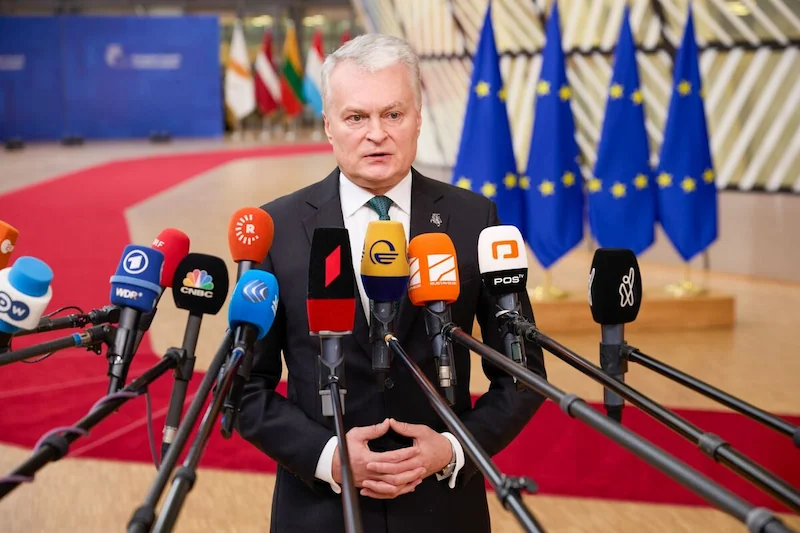


In a bid to mend strained relations with China following the establishment of a trade office with Taiwan three years ago, Lithuanian President Gitanas Nauseda has called for improved diplomatic ties with Beijing. Despite initially viewing the setting up of the trade outpost as a positive development in principle, Nauseda suggested that the representative office should use the word Taipei instead of Taiwan in adherence to international standards. This move aims to de-escalate tensions with China, which considers Taiwan its territory.
President Nauseda's stance on normalizing diplomatic relations with China comes at a crucial juncture as Chinese President Xi Jinping embarks on a European tour. Xi's visit includes stops in France, Serbia, and Hungary, with a focus on expanding Chinese investment in the region. The European Union's growing alignment with the US on security and trade has added complexity to China-EU relations, making Nauseda's diplomatic approach significant in the current geopolitical climate.
The fallout from the establishment of the Taiwan trade office exemplifies Beijing's firm stance on issues related to Taiwan's status. China's response included trade restrictions, removal of Lithuania from its customs system, and pressuring companies to halt business dealings with the Baltic nation. Additionally, Lithuanian diplomats in Beijing faced repercussions, such as having their identity cards canceled, highlighting the severity of the rift between the two countries.
President Nauseda's call for dialogue and de-escalation contrasts with his previous labeling of China as a "threat," citing its alignment with Russia. This nuanced approach underscores the internal political divisions within Lithuania, with opposition parties criticizing the government's tough stance on China. While Lithuania's foreign minister has urged a coalition of nations to combat "economic coercion" by China, Nauseda emphasizes the importance of respectful dialogue with all parties involved, including Taiwan and China.
As Lithuania navigates its foreign policy challenges, President Nauseda's diplomatic overture underscores the complexities of balancing economic interests and international relations. The President's call for engagement and dialogue reflects a strategic approach to defuse tensions and pave the way for improved relations with China, while also acknowledging the broader dynamics at play in the evolving global geopolitical landscape.