


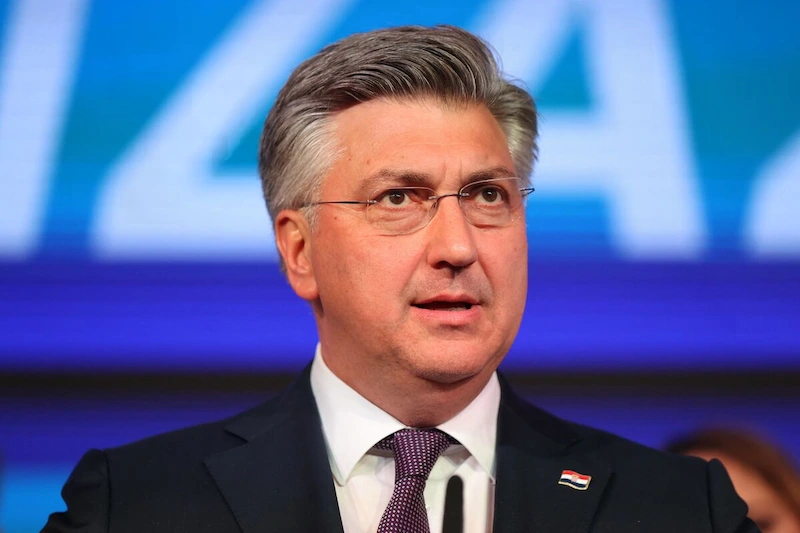


In a strategic political move, Croatia's Prime Minister, Andrej Plenkovic, has embarked on a coalition partnership with an anti-immigration nationalist party, Homeland Movement. This alliance signals a shift to the right for the Adriatic nation, as the Croatian Democratic Union (HDZ) aims to secure a parliamentary majority with its newfound political ally. The decision comes in the wake of a recent electoral setback that left Plenkovic's party without a clear majority, prompting the need for coalition-building to maintain governance stability.
Despite concerns about veering towards a more conservative stance, Prime Minister Plenkovic reassured the public that Croatia's overall direction will remain unchanged. Emphasizing the achievements made in human rights, minority rights, and inclusion during his tenure, Plenkovic affirmed that the country's progressive values would not be compromised under the new coalition. This commitment to upholding existing policies reflects a balancing act between political pragmatism and ideological coherence in the face of evolving regional dynamics.
The upcoming coalition government, if successfully formed, would represent a pivotal moment in Croatian politics, as it solidifies Plenkovic's position as the longest-serving premier since the nation's independence. His track record of steering Croatia towards Eurozone adoption and EU integration has garnered both praise and criticism, with the recent electoral setback highlighting the challenges of maintaining popular support in a diverse and polarized political landscape.
Political analysts point to the shifting dynamics within the HDZ, noting Plenkovic's efforts to distance the party from its more radical past and appeal to a broader spectrum of voters. The decision to align with Homeland Movement, a party founded on staunch nationalist principles, underscores the delicate balance between political expediency and ideological coherence in a complex multi-party system. As Croatia navigates this new political landscape, questions arise about the potential impact on minority rights, education policies, and public discourse in the country.
Amidst the post-election turmoil and coalition negotiations, Plenkovic's leadership faces scrutiny from both domestic and international observers. The challenge of maintaining a centrist agenda while accommodating the demands of a nationalist partner poses a test of political skill and diplomatic finesse for the prime minister. As Croatia awaits the formal invitation from President Zoran Milanovic to form a new government, the stage is set for a nuanced interplay of competing interests, ideological alignments, and strategic maneuvering in the corridors of power.