


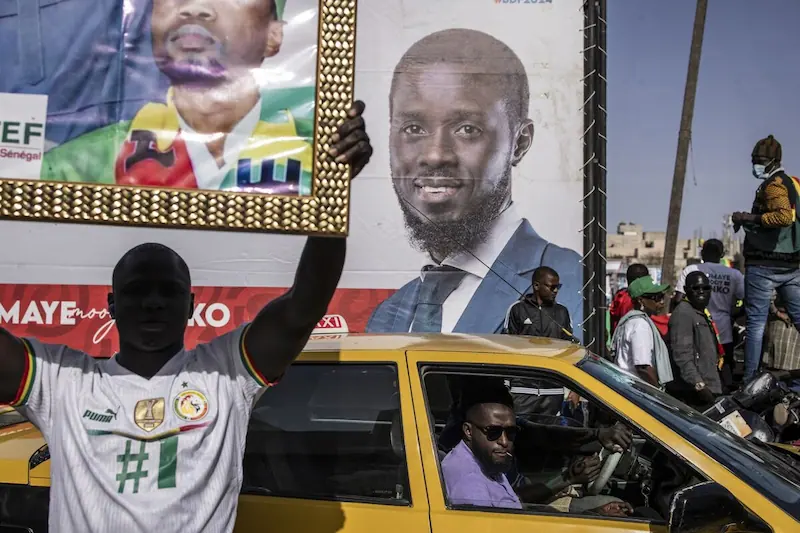


From detainment to leadership, Bassirou Diomaye Faye's remarkable journey captures the tumultuous political landscape of Senegal. After spending almost a year behind bars on charges of spreading fake news, Faye emerged as the youngest president in the nation's history just a month ago. His arrest, stemming from a Facebook post criticizing judges for aligning with the then-president's political agenda, symbolized the tightening grip on dissent in Senegal. The use of laws criminalizing misinformation to silence opposition voices has been a contentious tactic, revealing the complexities of power dynamics within the country.
Senegal's legislative framework, dating back to 1965, criminalized the publication of false news under Article 255. However, recent years have seen an intensified application of this law, particularly targeting government critics and protestors. The ambiguity surrounding the definition of false news has led to accusations of politically motivated prosecutions, eroding public trust in the government. As the crackdown on dissent escalated, Senegal's path to the recent election reflected a nation at the crossroads of democracy and authoritarianism.
Faye's ascension to the presidency was a twist of fate, catapulted into the political spotlight as his mentor and opposition candidate, Ousmane Sonko, faced disqualification over legal issues. The wave of support for Sonko and his party, Pastef, resonated with a disillusioned youth population seeking change in a country grappling with economic challenges. The crackdown on opposition figures and the suppression of dissent online underscored the government's attempts to stifle voices demanding accountability and transparency.
Senegal's road to the election was marred by violence and censorship, culminating in a series of protests and internet shutdowns. The online sphere emerged as a battleground for free speech, with opposition groups navigating a landscape fraught with risks of arrest and imprisonment. Faye's candidacy, amidst the backdrop of a repressive political environment, reflected the resilience and determination of those advocating for democratic principles in the face of adversity.
The election itself marked a turning point, with Sall's ruling coalition ousted from power as Faye secured a decisive victory. The transition of leadership, from a regime marred by allegations of misinformation and suppression to a new administration promising change, embodies the complexities of political transformation in Senegal. Faye's presidency, shaped by his experiences of detention and resistance, symbolizes a new chapter in the country's democratic journey, where the voices of the marginalized and oppressed are poised to shape the future of Senegal.