


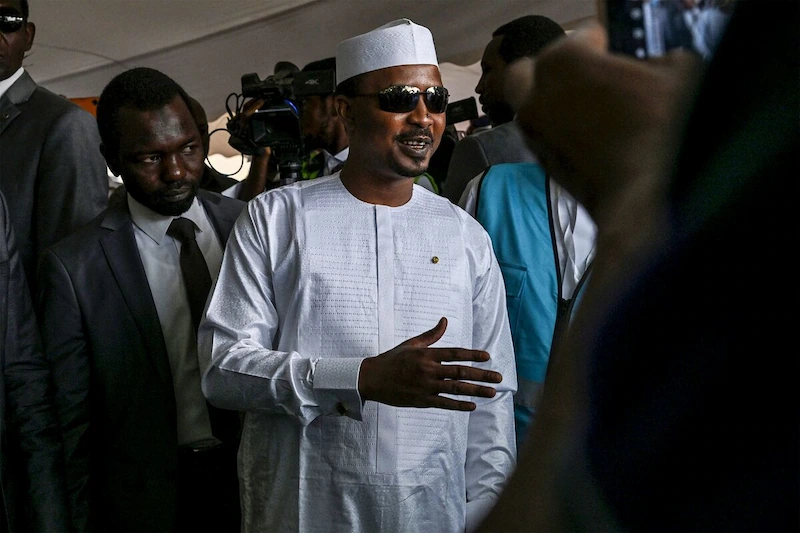


Amidst a backdrop of regional instability and shifting geopolitical alliances, Chad's military ruler Mahamat Déby has emerged victorious in the nation's presidential elections, solidifying his grip on power in a country that stands as a crucial Western ally in the fight against Islamist insurgents and Russian influence in the Sahel region.
The Central African nation of Chad plays a pivotal role in maintaining stability amidst neighboring countries plagued by unrest and conflict. With a series of coups unsettling neighboring Mali, Niger, and Burkina Faso, and the expulsion of French troops due to closer ties with Moscow, Chad stands as the last Western military ally in the region. Surrounded by countries in turmoil such as Sudan, Libya, and the Central African Republic, Chad's strategic importance cannot be understated.
As Déby's victory in the presidential elections was announced, securing 61% of the vote according to the National Election Management Agency, it marks a continuation of his family's rule that began after the passing of his father, ex-President Idriss Déby. With a focus on economic development, infrastructure, and security, Déby's leadership aims to address the challenges faced by Chad, one of the world's poorest nations despite being an oil-producing country.
However, the election results have been met with skepticism and opposition, with opposition parties rejecting the outcome and claims of a "resounding victory" from Prime Minister Succès Masra. Civil society movements and opposition coalitions have decried the elections as neither free nor fair, raising concerns of potential unrest and violent confrontations, especially in light of past crackdowns on political protests.
Despite the disputes and challenges surrounding the election process, Chad's strategic importance in the region cannot be overlooked. With Western powers increasingly wary of the rise of anti-Western sentiment and the potential for a shift in allegiances, Déby's victory cements Chad's position as a key player in the Sahel region. As external partners closely monitor the situation, the outcome of the elections will likely shape regional dynamics and influence future engagements and alliances in the volatile landscape of Central Africa.