


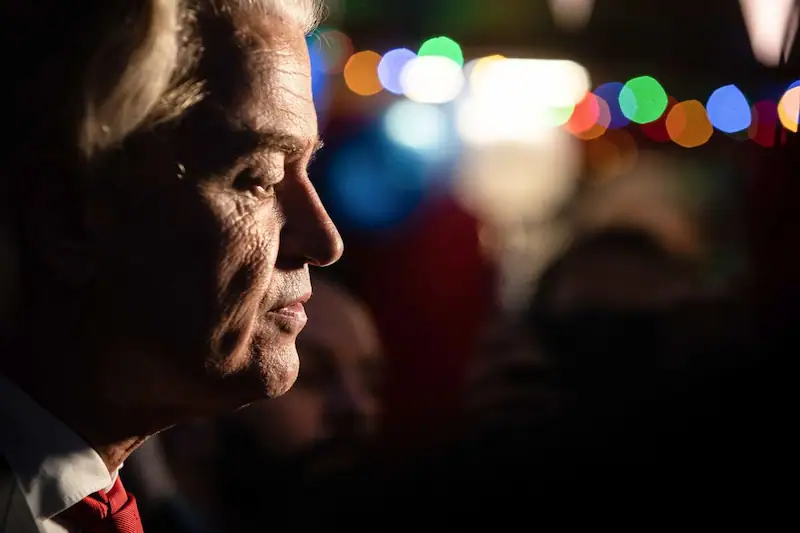


After months of negotiations following the Dutch elections, Geert Wilders, the leader of the far-right Freedom Party, announced a tentative agreement to form a right-wing coalition government with three other parties. These include the liberal VVD of outgoing Prime Minister Mark Rutte, the center-right NSC, and the populist Farmer-Citizen Movement. While the agreement marks progress, Wilders emphasized that there may still be adjustments and amendments to be made before reaching a final agreement.
Wilders, whose party secured the most seats in the election six months prior, had to relinquish his own ambition to become prime minister in order to break a deadlock during the talks. The parties have discussed potential candidates for the position, but the final decision is yet to be made, with the leader of the New Social Contract suggesting an announcement may come on Thursday.
Despite the progress, policy differences among the four parties pose a potential challenge to securing a final agreement and ensuring the government's effective functioning. However, the decision not to include the party leaders in the cabinet is seen as a step towards a more diversified and technocratic government structure.
As the leader of the largest parliamentary bloc, Wilders is expected to play a significant role behind the scenes alongside his coalition partners. Advocating for stricter immigration policies, the new government is likely to take a tough stance on asylum seekers.
Reports suggest that Ronald Plasterk, a former minister and conservative columnist, may be appointed as the lead negotiator for the government formation. Plasterk's background in government and affiliation with a different party could help bridge any ideological gaps among the coalition partners.
Despite his anti-Islamic stance, Wilders has displayed flexibility during the coalition talks, toning down some of his more controversial proposals. The coalition plans to reverse certain tax policies, including the cancellation of a 15% tax on share buybacks and the restoration of tax breaks for expatriates, which had faced criticism from Dutch businesses for potentially impacting competitiveness.
The road ahead remains uncertain, but with the promise of a new government on the horizon, the Dutch political landscape seems poised for a significant shift under this right-wing coalition led by Geert Wilders.