


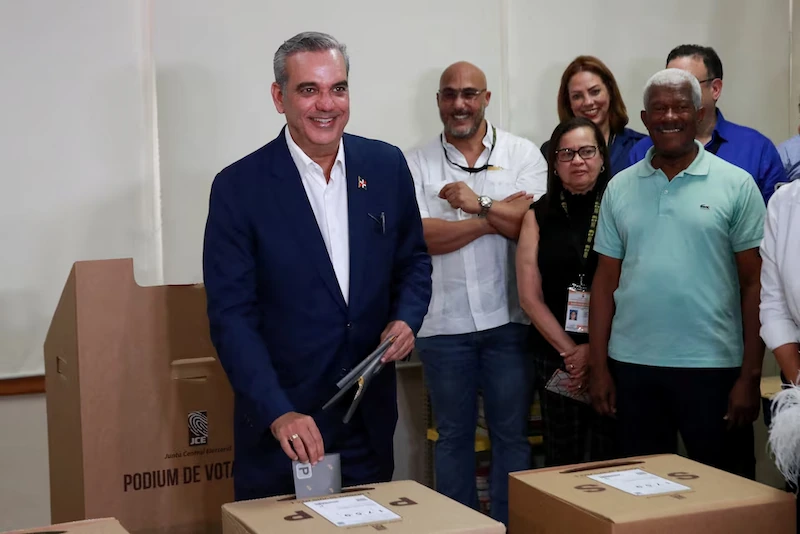


As the Dominican Republic prepares for a pivotal election day, the nation's future hangs in the balance as up to 8 million eligible voters head to the polls to select the next president and members of parliament. The election, considered a referendum on the popular incumbent Luis Abinader, signifies a crucial moment for the country.
President Luis Abinader, known for his anti-corruption stance and adept management during the COVID-19 crisis, faces stiff competition from opponents such as three-time former President Leonel Fernandez and first-time candidate Abel Martinez. Abinader's strong handling of the pandemic and hardline approach on issues like Haiti have garnered him significant support among the electorate.
Polls indicate that Abinader is the frontrunner, with a potential for a substantial victory in the first round of voting. However, if no candidate secures over 50% of the vote, a runoff will be held on June 30. Abinader's administration has been praised for overseeing a successful campaign, characterized by recent election law reforms, the country's first-ever presidential debate in April, and a robust anti-corruption drive.
Despite Abinader's achievements in revitalizing the tourism industry and driving economic growth, challenges persist, including concerns over crime rates and the potential impact of migration from Haiti. Economic issues, such as inflation and inequality, also require attention to ensure the well-being of all citizens in the Dominican Republic.
In a display of civic duty and hope for positive change, voters are turning out to make their voices heard. The atmosphere at polling stations is peaceful, with soldiers guarding the facilities to ensure a smooth voting process. Regardless of the election outcome, the Dominican Republic is poised for a significant political transition, with the hopes of addressing critical challenges and advancing the nation's prosperity under a new leadership.