


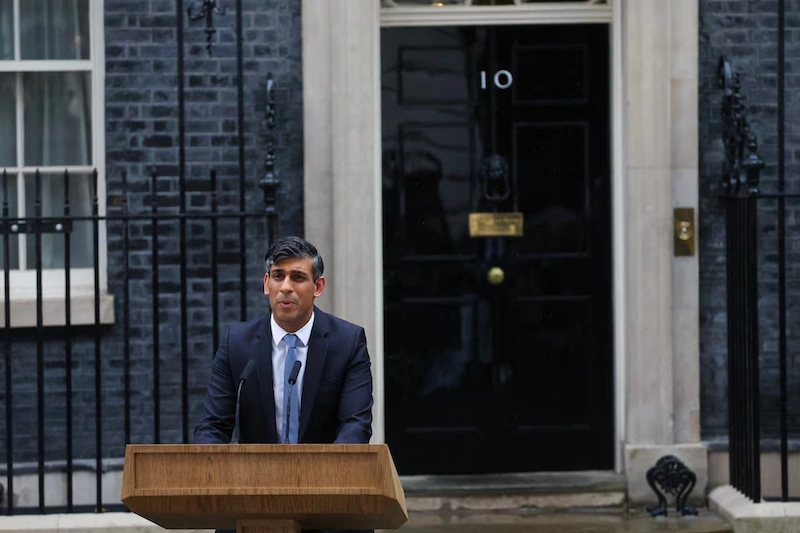


In a surprise announcement on Wednesday, British Prime Minister Rishi Sunak declared a national election for July 4, signaling a turning point for the country after 14 years of Conservative rule. Despite the widely anticipated victory of the opposition Labour Party in the upcoming election, Sunak seemed determined to make his case to the British public.
Standing outside his Downing Street office amidst pouring rain and chanting protesters, Sunak highlighted his government's achievements while warning against the uncertainty of a Labour-led future. The Prime Minister accused Labour leader Keir Starmer of lacking a clear plan, contrasting his party's commitment to economic stability.
Acknowledging the challenging odds, Sunak acknowledged his party's lagging position in the polls and his reliance on a tight-knit team of advisors. Nevertheless, he seemed emboldened by recent economic gains, hoping to present a vision for a new term to voters.
Critics within the Conservative party expressed mixed reactions to Sunak's decision, with some viewing the timing of the election as strategic amid potential economic downturns. However, concerns lingered over the government's ability to deliver on promises, especially related to tax cuts and controversial asylum seeker policies.
As campaigning intensified on both sides, economic and defense issues took center stage. Sunak's government warned of potential tax hikes under Labour, while the opposition criticized the Conservatives for years of economic mismanagement and instability. With Labour holding a significant lead, the prospect of a dramatic shift in British politics loomed large.
Despite Labour's advantage, uncertainties persisted, with some voters still undecided. Labour officials acknowledged the need for a substantial swing in votes to secure a majority. As the election date drew closer, both parties geared up for what promised to be a fiercely contested battle for power and the future direction of the United Kingdom.