


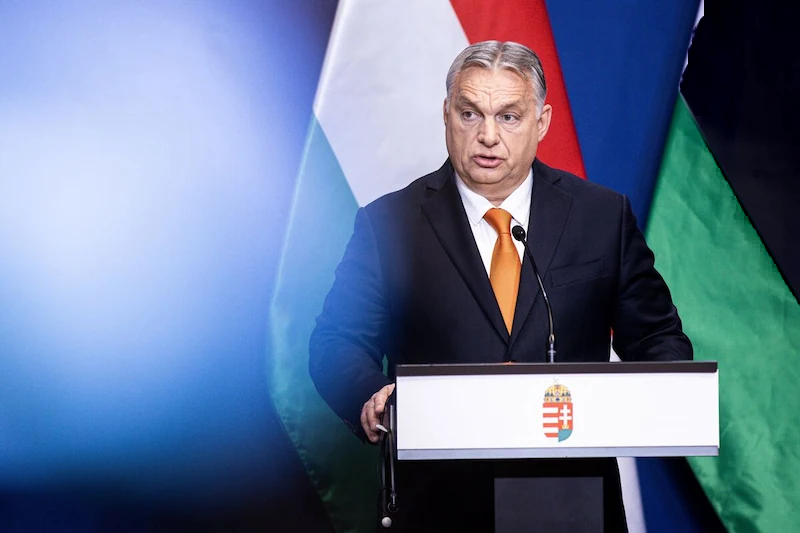


In a continued standoff between the European Union and Hungary, the European Commission has decided to extend its legal proceedings against the Hungarian government over a contentious "sovereignty-protection" law. Despite Prime Minister Viktor Orban's administration's efforts, the concerns raised by the legislation remain unaddressed, prompting the EU to take further action.
The European Commission has issued a two-month deadline for Hungary to respond to the "reasoned opinion" outlining the apprehensions regarding the law. Failure to provide satisfactory answers may lead to the case being escalated to the European Court of Justice. This development marks a significant escalation in the ongoing conflict between Orban's government and the EU.
The controversial Sovereignty Protection Agency in Hungary, headed by a former pro-government media executive, has drawn ire for its recent actions. The agency raised eyebrows by initiating an investigation into opposition leader Peter Magyar, raising suspicions that it may be used to target political opponents. Its broad mandate includes scrutinizing political parties, NGOs, and media under the vague grounds of national sovereignty, with the authority to even involve intelligence agencies in its probes. Violations detected in the lead-up to elections could result in severe penalties, including incarceration.
The clash over the sovereignty-protection law and the actions of the Hungarian agency encapsulate the wider concerns within the EU regarding the rule of law and democratic principles in Hungary. The ongoing tension between the EU and Orban's government highlights the challenges posed by such laws that have the potential to erode democratic norms and undermine the values the EU stands for.