


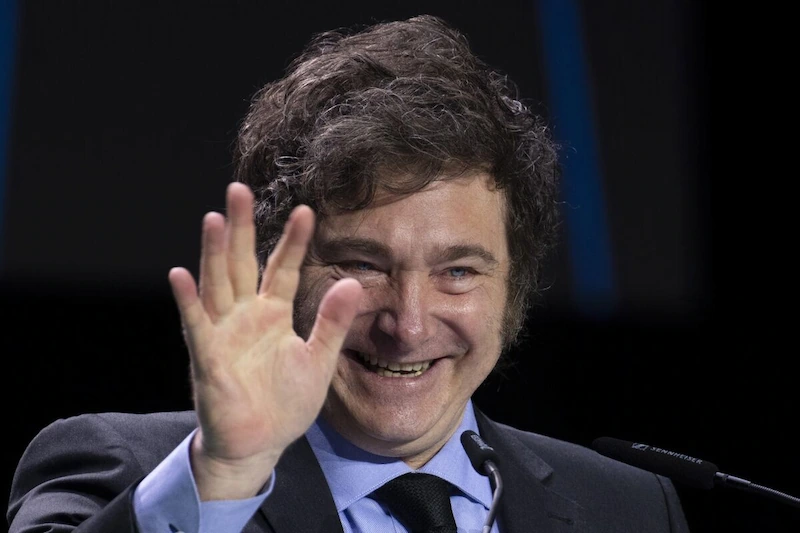


Javier Milei, Argentina’s president, has chosen to change the leader of his cabinet amidst challenges with pushing through crucial economic reforms in Argentina's congress. The move comes as attempts to freshen the negotiation strategy to assist the progression of the economic reform plans.
The president approved the resignation of his cabinet chief, Nicolas Posse, on Monday night, in a significant change in his administration since Milei’s inauguration on December 10. The role of the cabinet chief was assumed by Interior Minister Guillermo Francos, who was the key party in the negotiations between President Milei and the leaders of Congress over the reform proposals.
Despite the fact that this is one of the quickest high-level changes observed in recent presidencies, the investor community seemed generally satisfied. Argentine dollar-denominated sovereign bonds saw an increase on Tuesday, recovering from initial losses, with the 2029 dated bonds trading up to 56 cents on the dollar based on Bloomberg's indicative price data.
Francos, unlike his secretive predecessor Posse, engaged with the press through a news conference held on Tuesday. His initial tasks after assuming the new role would be discussing the status of Milei’s multi-purpose economic reform bill with Senate leaders.
Francos relayed to media outlets that his immediate mandate from the president is to stimulate governance amidst the prevailing political climate, while working towards achieving a consensus in Congress on the proposed bill. Last week, Milei had cautioned that the performance of all cabinet members would be evaluated based on the congressional approval of the bill.
Posse tendered his resignation as Milei was on his way to San Francisco on Monday for a series of discussions with top level executives of major corporations including Apple Inc., Alphabet Inc., and Meta Platforms Inc.
Despite promises of comprehensive economic measures, investor apprehension has been growing due to Milei’s inability to fast-track these reforms, originally expected to be in place by May 25. The president has now admitted that the economic package might not receive the required approval till June or July.
Posse had played a pivotal role in the initialization of negotiations between Argentina and the International Monetary Fund regarding the country’s $44-billion program during the early months of Milei’s administration. Preferring to remain low-key, Posse had shied away from public announcements, barring his mandatory interactions before Congress.
Before his association with the Milei administration, Posse had a successful stint at Aeropuertos Argentina 2000, which is part of the same holding company, Corporacion America, where Miles worked under billionaire Eduardo Eurnekian. Posse is known for his key contributions towards organizing Milei’s campaign, and his departure came as a surprise after he boosted the campaign following Milei's unexpected primary win in August.