




The Mexican peso experienced a sharp decline for the second consecutive trading session following a surprising landslide victory by the ruling party in the recent election, introducing a new layer of local political risk to one of the world's leading carry trades.
With a drop of up to 2.9% to 18.1936 per dollar by midday in London, the peso's losses deepened after a 3.8% slump on Monday, marking its most significant one-day decrease since June 2020. As a result, Mexico's benchmark stock index also tumbled by 6.1%, the largest drop since the beginning of the pandemic.
President Andres Manuel Lopez Obrador's Morena party and its allies secured an overwhelming majority in congress, nearing the threshold for a supermajority. With two-thirds of the seats in the lower house and almost two-thirds in the senate, the ruling coalition's potential ability to enact constitutional amendments sparked concerns among investors about heightened state intervention in the economy and constraints on power.
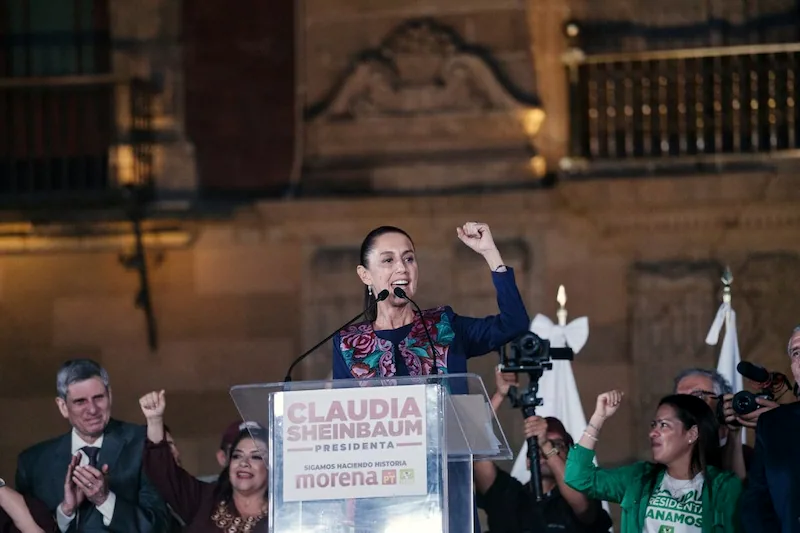
The anticipated easy victory of Lopez Obrador's protege Claudia Sheinbaum added to market apprehensions. Analysts at Commerzbank AG, Michael Pfister, and Ulrich Leuchtmann, conveyed that fears over the ramifications of this supermajority have eclipsed the benefits of political continuity.
Despite the concerns, the analysts expressed confidence that Sheinbaum would work to allay market anxieties in the coming weeks. Throughout her campaign, she signaled a divergence in approach from her mentor, implying a more moderate stance.
"In practice, she is likely to try to reassure the market that she will hold off on some of the more controversial issues for the time being, i.e., that she does not plan any major constitutional changes or the like for the time being. If the market believes her, the peso is likely to stabilize again," the analysts noted.
Previously a top-performing major currency, Mexico's peso had enjoyed a strong performance in recent years, driven by elevated interest rates and its close economic ties with the United States. While some anticipated a market-friendly shift under Sheinbaum's leadership, the specter of constitutional alterations injected a sense of fear into investors, according to Gabriela Siller, the head of economic research at Grupo Financiero Base.
“Markets are going to have to stabilize,” Siller said. “The thing is where.”