


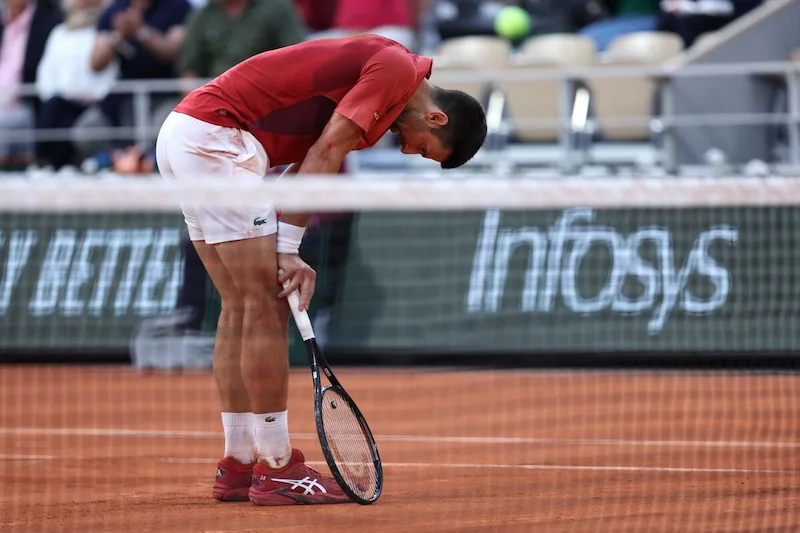


In a stunning turn of events at the French Open, Novak Djokovic's title defense came to an abrupt end as he was forced to withdraw from the tournament due to a torn medial meniscus in his right knee. The injury, discovered through an MRI exam following his grueling fourth-round victory, will not only see Djokovic relinquish his No. 1 ranking but also end his chance at capturing a 25th Grand Slam title at Roland Garros.
Initially keeping his knee troubles under wraps, Djokovic's injury flared up during his match against Francisco Cerundolo, ultimately impacting his performance on the court. Despite displaying immense resilience and managing to secure the win, the toll on his knee was evident, leading to the eventual decision to withdraw from the tournament.
Having faced persistent knee discomfort in the lead-up to the French Open, Djokovic's hopes of clinching another title on the Parisian clay were dashed as he made the difficult choice to prioritize his health and recovery. The timing of the injury, which thwarted his bid to defend his title, comes amidst a challenging season for the Serbian player, where he has struggled to reach the heights of his past successes.
With Djokovic's departure, the landscape of the tournament shifts, opening up opportunities for other contenders to make their mark. As the focus now shifts to the remaining matches, fans are left to wonder about the long-term implications of Djokovic's injury and how it might impact his future performances on the ATP tour.
As the tennis world comes to terms with Djokovic's untimely exit from the French Open, the overarching question lingers: how will this setback shape the rest of the season for the former World No. 1 and what does this mean for the competitive balance at the top of men's tennis? The answers are yet to unfold, but Djokovic's withdrawal serves as a poignant reminder of the physical demands and uncertainties that accompany the sport at its highest levels.