


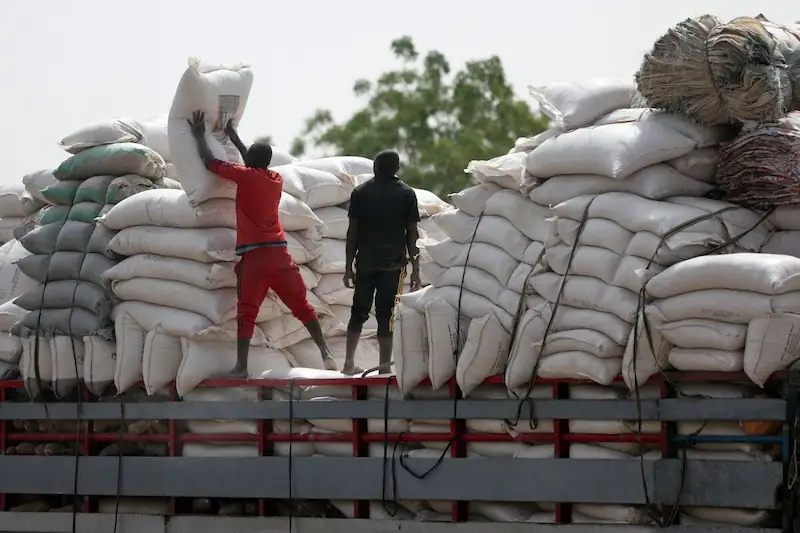


In response to the alarming inflation rates gripping Nigeria, the government is contemplating a bold move to suspend import duties on essential items such as staple food, drugs, and other vital commodities for a period of six months. This unprecedented step aims to alleviate the financial burden on the populace in Africa's most populous nation, where inflation has surged to 33.7% in April, marking the fastest pace in nearly three decades. President Bola Tinubu is facing mounting pressure to curb the rising cost of living and tackle the economic challenges plaguing the nation.
The proposal, currently under consideration by President Tinubu, includes measures to waive levies on critical supplies like fertilizers, poultry feed, flour, and grains. Additionally, the government plans to cease borrowing from the central bank through ways and means advances as part of its strategy to stabilize the economy. The Inflation Reduction and Price Stability Order, outlined in the document, mandates collaboration between the Ministry of Finance and the Central Bank of Nigeria to offer low-interest loans to key sectors such as agriculture, pharmaceuticals, and manufacturing.
Despite previous attempts to address the inflation crisis, including the declaration of a state of emergency for food security last year and the mobilization of significant funds for food production, Nigeria continues to grapple with price hikes and currency depreciation. With a significant portion of the population living in extreme poverty, the government's focus on enhancing food supply, reducing transportation costs, and supporting manufacturing is crucial to improving economic conditions for its citizens.
In a bid to further alleviate financial strain, President Tinubu is expected to suspend value-added tax on essential items like automotive gas oil, basic food products, and semi-processed staple foods, along with cutting tariffs on raw material inputs for food production, electricity, public transportation, agricultural inputs and produce, and pharmaceuticals for the remainder of the year. These comprehensive measures signal a commitment to combating inflation and fostering economic stability in Nigeria.