


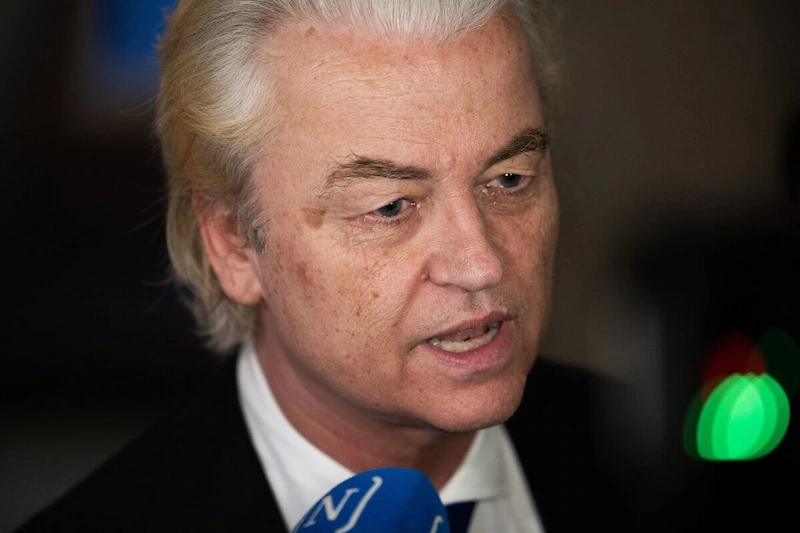


After more than six months of negotiations following the November elections, Dutch far-right politician Geert Wilders announced that a coalition agreement has been reached among the four parties. The parties involved, including Wilders' Freedom Party, the liberal VVD, the center-right NSC, and the populist Farmer-Citizen Movement, have come to a consensus on key issues, with a focus on significantly reducing migration.
Wilders, who led his party to a surprising victory in the elections, had been working tirelessly to form a right-wing coalition. However, the road to agreement was not without obstacles, as setbacks and the need for compromises arose along the way. Notably, Wilders had to step back from his ambition of becoming the prime minister to facilitate progress in the talks.
One significant aspect of the agreement is that all party leaders have committed to not participating in the next cabinet, ensuring a fresh mix of perspectives and expertise in the government. The coalition has put forward Dick Schoof, a former head of the Dutch intelligence service, as their choice to replace Mark Rutte as the next leader.
The formation of the new cabinet is expected to be finalized by June 26, with a blend of ministers from various political backgrounds and professional fields. This development marks a crucial step forward in Dutch politics, demonstrating the ability of diverse parties to come together and govern effectively for the benefit of the nation.