


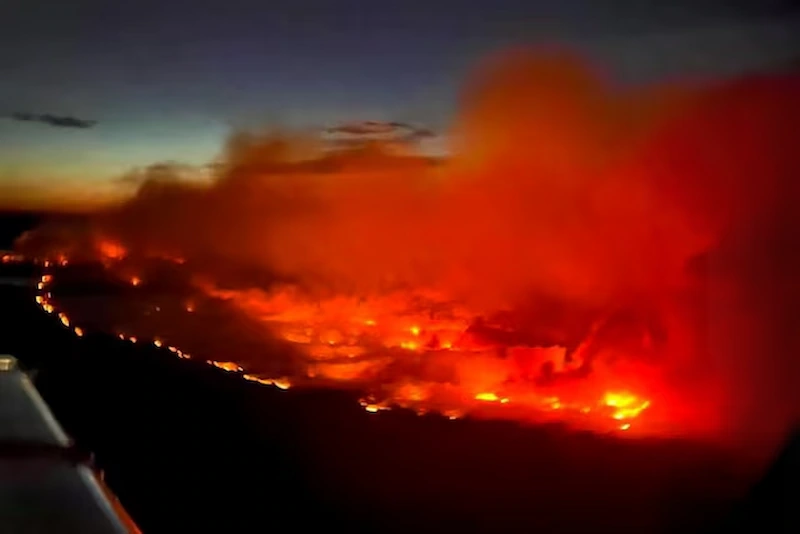


In preparation for the upcoming months of June and July, Canadian officials are closely monitoring the potential for increased wildfire activity across the country, particularly in drought-affected regions of the west. Despite a relatively mild start to the wildfire season in contrast to the devastating year of 2023, meteorologists are forecasting a warmer and drier summer ahead, signaling a heightened risk for wildfire outbreaks.
Emergency Preparedness Minister Harjit Sajjan addressed the media, highlighting that while the current number of active fires is below average, specific areas remain at an elevated risk due to the combination of hot, dry, and windy conditions. As of now, there are 69 active blazes in Canada, with approximately 500,000 hectares of land already ravaged by flames in 2024. This is a stark contrast to the unprecedented 6,600 fires that ravaged 15 million hectares last year, demonstrating the potential scale of destruction.
Projections suggest that the wildfire risk will persist in the upcoming months, particularly in regions already grappling with severe drought, such as northwestern Alberta, northeastern British Columbia, and southern Northwest Territories. Earlier this year, uncontrolled forest fires in British Columbia and Alberta led to widespread evacuations, underscoring the urgency of preparedness and prevention measures.
While recent rainfall provided temporary relief, the looming prospect of a hotter and drier summer necessitates ongoing vigilance and readiness from emergency responders and residents alike. The lessons learned from the devastating wildfires of 2023 will play a crucial role in shaping proactive strategies to mitigate the impact of potential fires and safeguard vulnerable communities in the face of nature's unpredictable forces.