


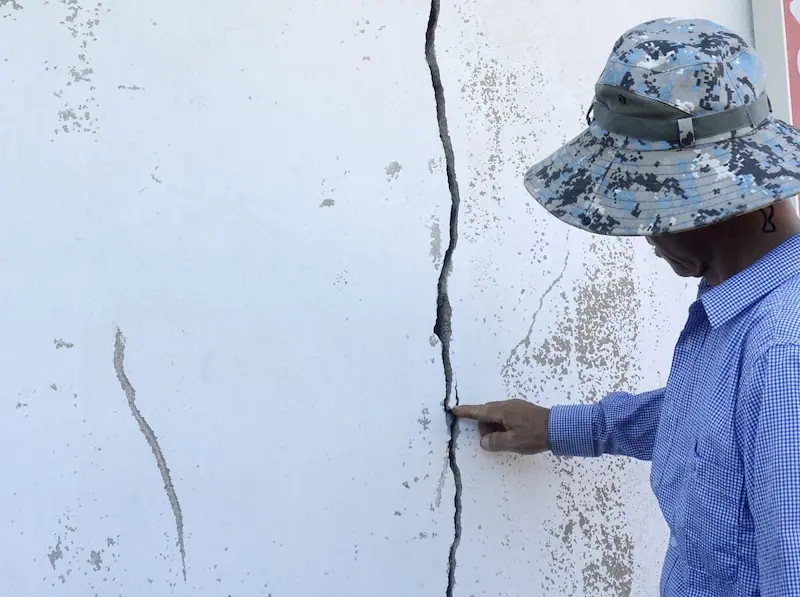


South Korea was jolted by a powerful earthquake measuring 4.8 on the Richter scale on Wednesday, causing buildings in Seoul, located 200 kilometers away, to sway. The temblor, one of the strongest in recent years, struck the southwestern region at 8:26 a.m., catching residents off guard in a city unaccustomed to seismic activity. President Yoon Suk Yeol, currently abroad, swiftly called for a damage assessment in the aftermath of the quake.
Despite the intensity of the earthquake, reports indicated that there was minimal damage, with fire officials confirming no significant casualties or destruction. However, some structures in the vicinity of Buan experienced shattered windows and cracked walls, leading to the temporary closure of four schools. The region, known for its ancient Buddhist monasteries, bore the brunt of the seismic activity.
Following the initial quake, approximately 15 aftershocks were recorded, though most registered below magnitude 2. While the tremors caused some unease among the population, no major disruptions were reported. Additionally, South Korea's Nuclear Safety and Security Commission ensured that all domestic nuclear facilities remained unharmed by the seismic event.
This incident recalls South Korea's seismic history, notably the destructive earthquakes in 2016 that affected the city of Gyeongju, forcing prominent companies such as Samsung Electronics Co. and LG Display Co. to halt operations. The country has experienced a notable increase in earthquake frequency, with 77 recorded in 2022 and 106 in 2023, as per data provided by South Korea's meteorological agency. Despite the relatively minor impact of the recent earthquake, it serves as a reminder of the unpredictable nature of natural disasters in the region.