


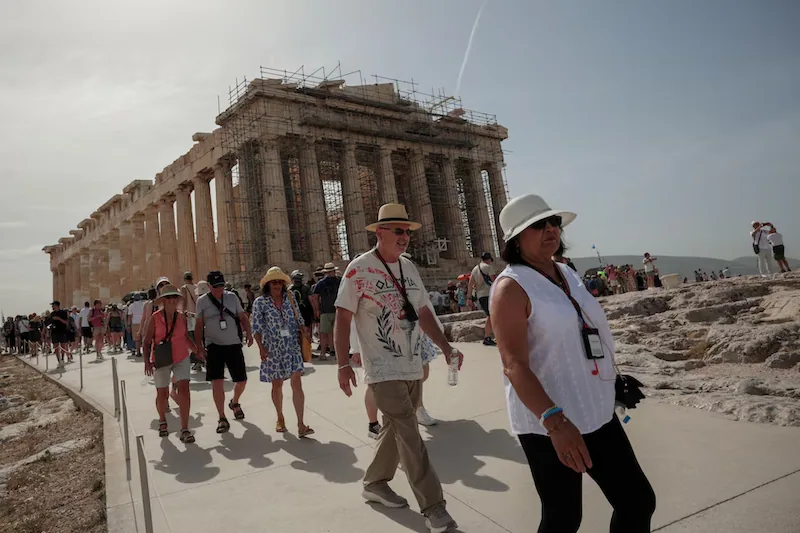


Amidst scorching temperatures reaching unprecedented levels, Greece finds itself grappling with the wrath of a relentless heatwave that has forced the closure of iconic ancient sites in Athens. As the mercury soared towards a staggering 43 degrees Celsius, the renowned Acropolis and neighboring attractions were shuttered to protect both visitors and historical artifacts.
In a bid to mitigate the searing heat, primary schools and nurseries across the country made the difficult decision to suspend operations, ensuring the safety of students amidst the oppressive weather conditions. Tourists seeking respite from the scorching sun found solace at designated air-conditioned spots, while locals sought relief in cool rooms provided by the city, resorting to handheld fans to ease the stifling heat.
Despite the valiant efforts of firefighters who battled raging wildfires under the sweltering sun, the looming threat of strong winds continued to keep them on high alert, heightening concerns of further blaze outbreaks. Climate change has cast a long shadow over Greece, with rising temperatures exacerbating the risk of deadly fires and erratic weather patterns in recent years.
Athens, known for its unique urban landscape nestled amid mountains and coastline, faces the brunt of these extreme weather conditions, with forecasts predicting a potential rise of 2 degrees in summer temperatures by 2050. In response, Athens Mayor Haris Doukas has embarked on an ambitious plan to enhance green spaces by planting thousands of trees, aiming to lower the urban heat island effect and create a more sustainable and resilient environment for residents and visitors alike.
As Greece confronts the harsh realities of a changing climate, the collective efforts to adapt and mitigate the impact of heatwaves underscore the urgent need for sustainable practices and proactive measures to safeguard both heritage sites and the well-being of the population in the face of escalating environmental challenges.