


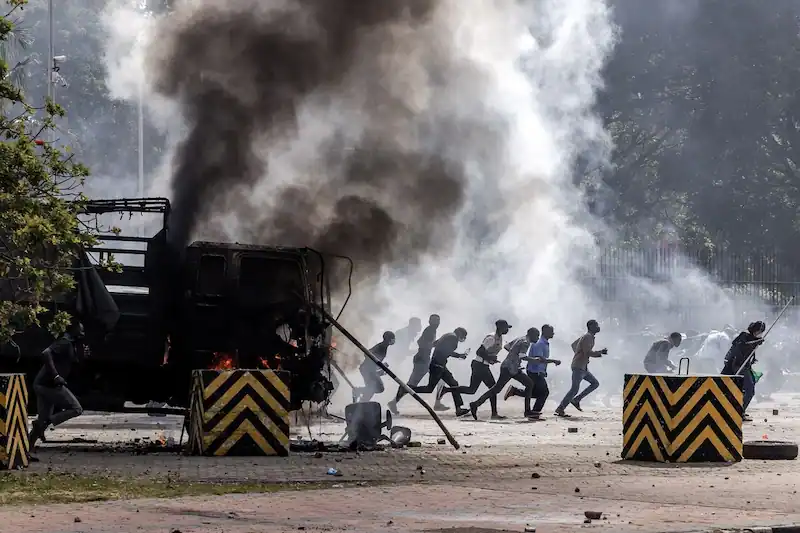


In Nairobi, the capital city of Kenya, a wave of anti-government protests turned deadly as police opened fire on demonstrators, resulting in the deaths of at least five people, with the toll potentially reaching eight. The protests, which aimed to shut down the economy in response to controversial tax hikes proposed by President William Ruto, escalated as thousands of protesters gathered at the National Assembly building.
Despite the largely peaceful nature of the demonstrations, the situation took a violent turn as protesters breached the National Assembly, leading to clashes with law enforcement. The sound of live ammunition and tear gas filled the air as police attempted to disperse the crowds. The violence intensified as a fire broke out in the Senate building, and reports emerged of authorities disrupting the internet and threatening to shut down local news outlets.
The proposed tax increases by Ruto's administration were intended to address the country's financial challenges, high debt levels, and secure additional funding from the International Monetary Fund (IMF). While some of the most contentious tax measures, such as those on sanitary pads, bread, and cars, were dropped, protesters demanded the complete scrapping of the bill, criticizing the government's lack of focus on combating corruption and reducing unnecessary expenditures.
As the protests continue and tensions remain high, the future political implications for Ruto's administration are uncertain. The economic repercussions of the unrest were felt in the financial markets, with Kenyan dollar bonds experiencing yield increases. Amidst the ongoing turmoil, questions surrounding the IMF's role in the situation have emerged, with demonstrators attributing the harsh tax measures to the lender's influence.
The developments in Kenya echo similar protests seen in other countries facing IMF-prescribed austerity measures, highlighting a broader trend of public backlash against economic policies imposed by international financial institutions. As Kenya grapples with the aftermath of the violent clashes, the path forward remains uncertain, with potential implications for the country's financial stability and political landscape.