


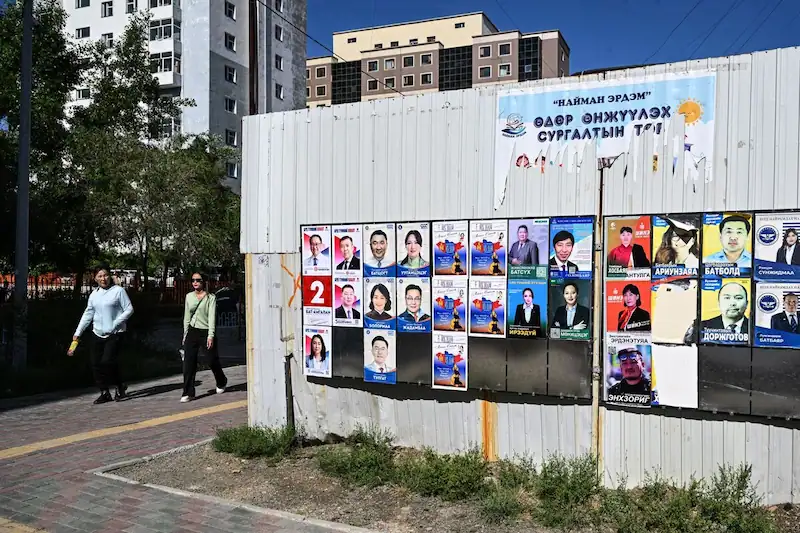


In an unprecedented turnout, over 60% of Mongolians cast their votes on Friday for a new parliament, marking a significant step towards choosing a party that can address the pressing issues of sharing mining wealth and tackling deep-rooted corruption. The election, the first since the constitution was amended in 2023 to expand the parliament by 50 members, paves the way for a more diverse representation in the legislature.
With turnout exceeding 63% by 8:30 pm local time and all wards meeting the minimum threshold, the excitement surrounding the election is palpable. The amendments to the rules and structure of the parliament promise a more inclusive and varied assembly of lawmakers. This election also saw the reinstatement of overseas voting, underscoring its significance as a pivotal moment in Mongolian politics.
All 126 seats in the State Great Khural are now up for grabs, with the magic number of 64 seats needed to secure a majority. Traditionally dominated by the Mongolian People's Party, which currently holds 62 seats, and the Democratic Party with 10 seats, the new amendments have paved the way for other parties like KhUN to gain traction. Furthermore, the new regulations ensure that at least 30% of the seats are reserved for women, a remarkable step towards gender equality in politics.
One of the central issues at stake in this election is the pervasive corruption within Mongolia's lucrative mining sector. Recent court verdicts against former government officials implicated in the misappropriation of state-owned coal underscore the urgent need for reform. With mining constituting a significant portion of Mongolia's GDP and exports, the sector's transparency and accountability are crucial for sustainable economic growth.
Amidst mounting tensions, including a tragic incident involving the death of a Democratic Party member allegedly at the hands of an election campaigner, the election atmosphere is charged. However, efforts such as dropping controversial candidates and international observation by bodies like the Organization for Security and Co-operation in Europe aim to ensure a fair and transparent electoral process.
As Mongolia grapples with issues of disinformation, social media manipulation, and economic diversification, the outcome of this election holds immense significance for the country's future trajectory. With a record number of candidates and revamped election districts, Mongolia stands at a crossroads, seeking to break free from the shackles of economic dependency and foster a more equitable and sustainable future for its citizens.