


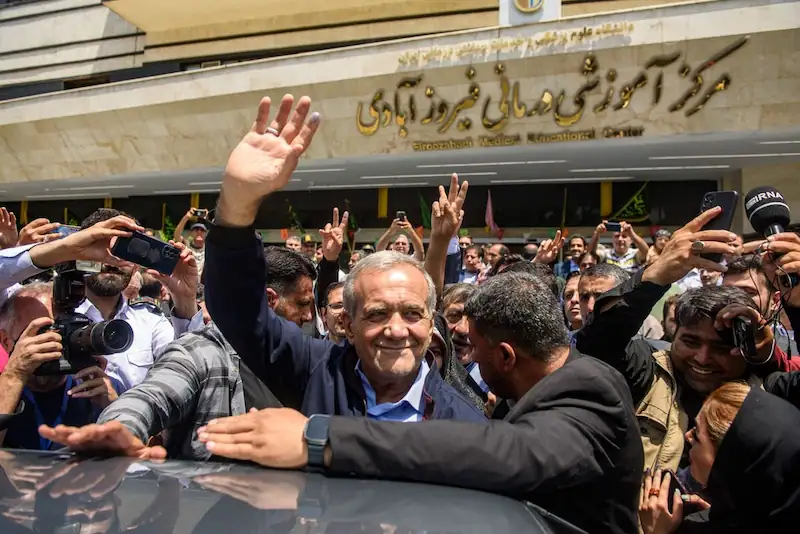


In a surprising turn of events, Iran's snap presidential election will proceed to a runoff on July 5, as no candidate secured the necessary majority for an outright victory. The runoff showdown will see reformist Masoud Pezeshkian, a former health minister and distinguished heart surgeon, facing off against the anti-Western hardliner, former nuclear negotiator Saeed Jalili.
Despite initial anticipation of a decisive outcome, Pezeshkian's lead in the latest vote count fell short of the required 50%, paving the way for a final showdown in the coming weeks. The campaign for the July 5 runoff will intensify, with both candidates striving to secure the support needed to claim victory.
The record-low voter turnout in this election, with only 24.5 million out of 61.4 million eligible voters participating, illustrates a concerning trend of diminishing engagement in political processes within Iran. This decline marks the third consecutive major ballot event in the country to witness a significant drop in voter turnout, signaling a growing disillusionment and opposition towards the ruling religious establishment, under the leadership of Supreme Leader Ayatollah Ali Khamenei.
The political landscape in Iran has been marked by heightened dissent and opposition in recent years, challenging the traditional power structures and ideologies. In 2021, the election of hardline cleric Ebrahim Raisi, who tragically passed away in a helicopter crash last month, was met with mixed reactions. Now, as the nation heads towards a critical runoff decision, the future direction of Iran hangs in the balance.
In addition to Pezeshkian and Jalili, other prominent candidates in the election included Mohammad Bagher Ghalibaf, the parliamentary speaker and former mayor of Tehran, who secured third place, and cleric Mostafa Pourmohammadi, finishing fourth. The runoff between Pezeshkian and Jalili is poised to be a pivotal moment for Iran, shaping the course of its leadership and policies for the foreseeable future.