


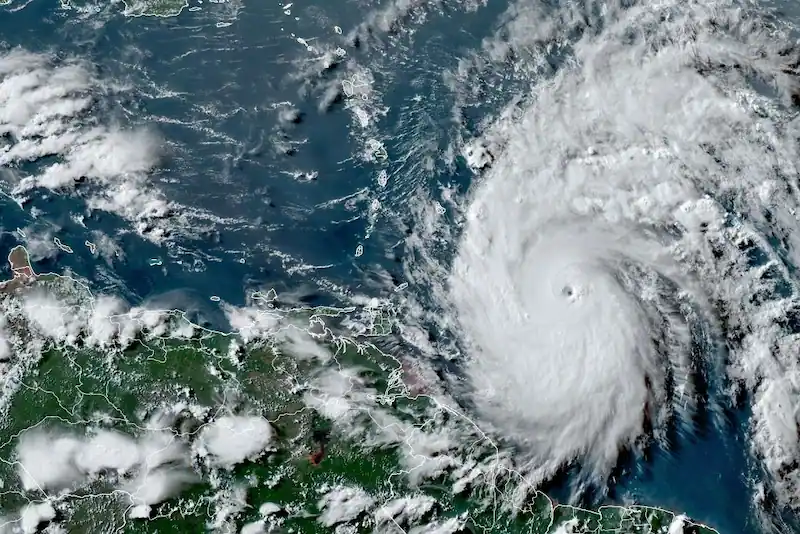


Hurricane Beryl, a record-breaking storm of exceptional strength, is rapidly intensifying as it barrels towards the Caribbean south of Grenada. The US National Hurricane Center reported that Beryl has regained Category 4 status with winds reaching up to 130 miles per hour, positioning it as a major threat to the region. Remarkably, Beryl became the earliest Category 4 hurricane ever observed in the Atlantic, a rare occurrence described by meteorologists as unprecedented for the month of June.
As the storm approaches the Windward Islands, Grenada and St. Vincent and the Grenadines have declared emergencies, anticipating catastrophic winds, life-threatening storm surge, and heavy rainfall. With damages on Grenada estimated to potentially reach $600 million, the region is bracing for an economic blow equal to 50% of the nation's GDP, according to disaster modelers.
The early arrival of such a powerful storm raises concerns about the intensity of the upcoming hurricane season. The warm temperatures in the Atlantic and a record-breaking warm June have created favorable conditions for rapid storm development, setting the stage for a potentially active season. Following Beryl's path, another storm is projected to form and gain strength, though Beryl's track is expected to limit the second storm's development.
Despite the threats posed by Beryl, the storm is projected to steer clear of the US Gulf Coast for now, with high pressure systems diverting its trajectory. Concurrently, Tropical Storm Chris has made landfall in Mexico, bringing heavy rainfall and potential mudslides to the region.
Looking ahead, Beryl's journey through the central Caribbean may lead to landfall in Mexico or Belize later in the week, while a third storm looms in the forecast. The early onset of storm activity and the potential for multiple significant hurricanes highlight the need for preparedness across the region. As the Atlantic hurricane season unfolds, vigilance and readiness are crucial in the face of these powerful natural phenomena.