


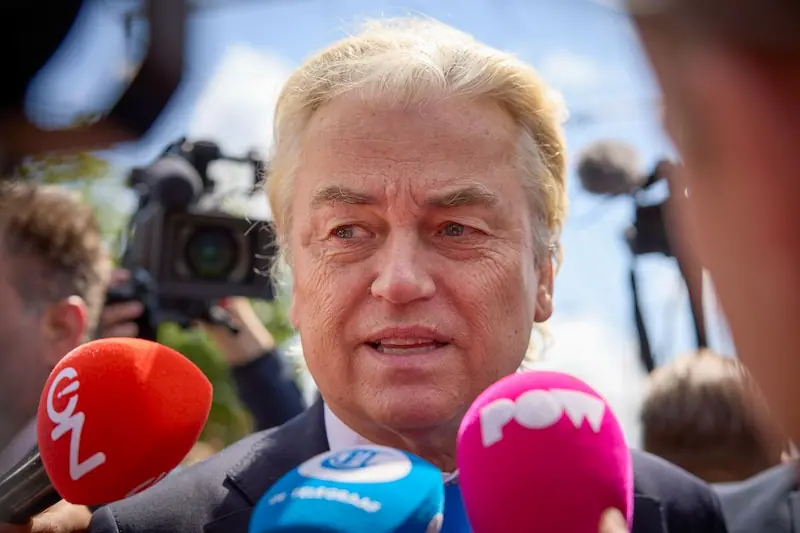


In a historic move, the Netherlands' new cabinet was sworn in, featuring Geert Wilders' far-right Freedom Party for the first time in government. This signals a significant shift towards hard-right policies aimed at reducing migration, a response to growing concerns among voters in Europe.
The newly formed government, led by Wilders, is set to enact emergency legislation to limit the influx of migrants and intends to seek exemption from the European Union's migration policy. This stance reflects the rising influence of nationalist and far-right parties across the EU, with recent successes seen in France as well.
Despite facing challenges following his party's win in November's elections, Wilders was unable to secure the prime minister position, which went to former spy chief Dick Schoof. Schoof, a non-partisan figure with expertise in migration and security, now heads the government of the EU's fifth largest economy, succeeding the long-serving Mark Rutte who will soon lead NATO.
The coalition government comprises four parties, with the leaders choosing to remain outside the cabinet. Ministries have been allocated accordingly, with the Freedom Party securing five, followed by the center-right People's Party for Freedom and Democracy with four ministerial positions.
Among the notable appointments, Eelco Heinen of the VVD has taken on the role of finance minister, overseeing key economic decisions such as the fate of Tennet Holding BV's German unit and plans to reduce the state's ownership in ABN Amro Bank NV. Meanwhile, Reinette Klever from the Freedom Party now serves as the minister for foreign trade and development aid, potentially influencing the country's export policies and bilateral relations, including its involvement in global efforts to curb China's tech ambitions.
As the new Dutch government sets its course with a far-right agenda, it underscores the wider trend of nationalist movements shaping the political landscape in Europe, raising questions about the future direction of the continent.