


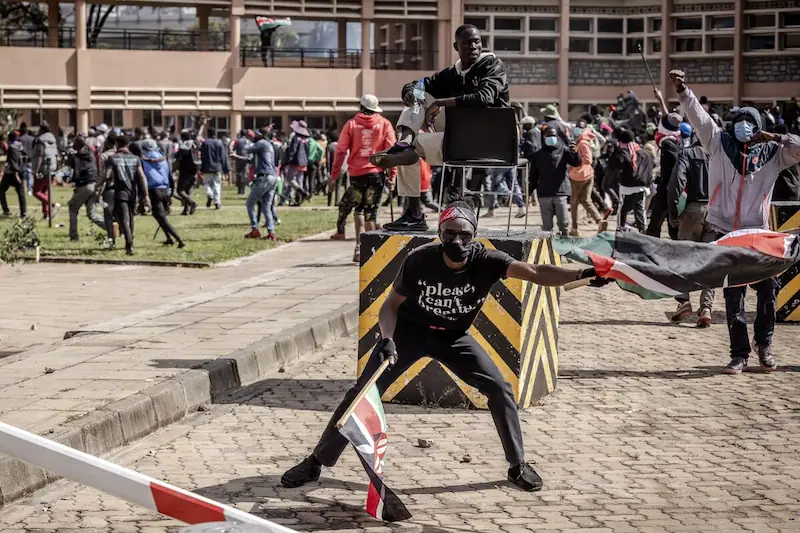


Amidst a renewed wave of anti-government demonstrations in Kenya, protestors are demanding accountability for state corruption and wasteful government spending. Police in Nairobi clashed with protestors, leading to the firing of tear gas as some individuals blocked roads with coffins. In Mombasa, chants of "Ruto Must Go!" echoed through the streets, while bonfires were lit in Migori in a display of dissent.
The protests, which have been ongoing for two weeks initially in response to President William Ruto's proposed tax reforms, have escalated in both intensity and demands. The withdrawal of the tax proposals did not quell the unrest, with calls now for Ruto and other politicians to resign. The unrest peaked on June 25 when protestors stormed parliament, setting parts of the legislative buildings on fire.
The response from security forces has drawn criticism from Kenya's human rights agency, citing excessive force and disproportionate measures. While the protestors have been blamed for some acts of lawlessness and infrastructure destruction in Nairobi, the government's heavy-handed approach has led to multiple casualties and injuries. The toll stands at 39 dead and hundreds injured, with reports of disappearances.
With Ruto in power for less than two years, the economic reforms implemented to shore up state finances have faced backlash from citizens. Increased taxes, new levies, and a tightening fiscal policy have been met with resistance, aggravated by the country's debt burden including repayments on international loans. The ongoing protests symbolize a nation grappling with economic challenges and demanding transparency and accountability from its leaders.