


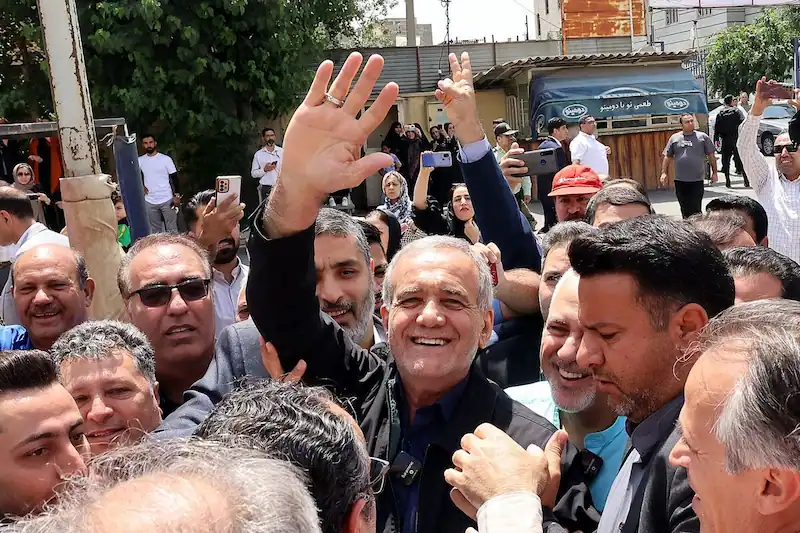


In a historic election, Masoud Pezeshkian, a distinguished 69-year-old heart surgeon, emerged as the newly elected president of Iran, defeating hard-line Islamist Saeed Jalili by a significant margin. The runoff saw a turnout of 49.8%, mirroring a sense of disillusionment and distrust within the Iranian political landscape overseen by Supreme Leader Ayatollah Ali Khamenei. The significantly low voter turnout, deemed as a reflection of the flawed election process by the US State Department, sheds light on the prevalent malaise in the country.
Pezeshkian's victory signifies a potential shift towards reform and a desire for improved relations with the West. His primary objective is to revive the 2015 nuclear deal, a milestone agreement that unraveled when the US, under former President Donald Trump, withdrew in 2018. As Pezeshkian aims to mend relations and spur economic growth by lifting sanctions, he faces formidable hurdles in a political system dictated by hard-line institutions.
An advocate for dialogue and diplomacy, Pezeshkian's presidency offers a glimmer of hope for Western powers seeking to engage with Iran. However, the challenges ahead are formidable, with looming uncertainties surrounding US policy post-November elections. Despite the inherent constraints within Iran's political structure, Pezeshkian's ascendancy as a non-cleric symbolizes a departure from the traditional religious elite, hinting at a potential shift in governance style.
The international community's response to Pezeshkian's election remains cautious, with a keen eye on Iran's role in regional conflicts, notably the escalating tensions with Israel. As the new president grapples with internal dissent, particularly regarding women's rights and political freedoms, his ability to navigate the complex power dynamics and enact meaningful change remains to be seen. Despite the challenges, Pezeshkian's presidency embodies the Iranian populace's persistent call for reform and progress, signaling a new chapter in the nation's political trajectory.
In a divided and tumultuous region, Iran's new president stands as a beacon of hope amidst a backdrop of uncertainty, offering a glimmer of optimism for a nation poised at a pivotal crossroads.