


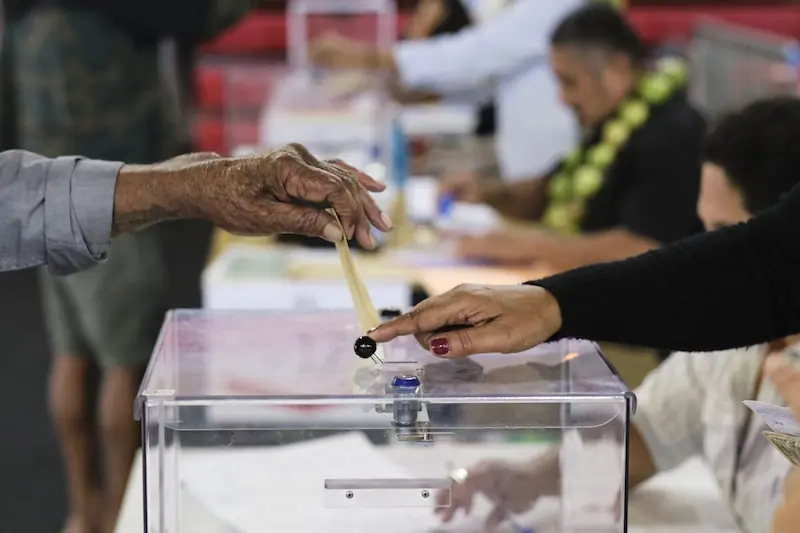


In the aftermath of a turbulent parliamentary election in France, the country's political landscape is in a state of flux as officials dive into negotiations to form the next government. Freshly-elected lawmakers from the left-wing alliance that clinched the top spot in Sunday's vote were busy settling into their new roles in the National Assembly, while President Emmanuel Macron huddled with his party members to strategize the way forward.
Macron's decision to call for snap elections following a defeat to the far right in the European election has left him without control of the French parliament. With the lower house now divided among three competing factions, the question of who will lead the next government looms large.
The New Popular Front, comprising leftists including the Greens, the Socialists, and France Unbowed, holds 178 out of 577 seats and may have the initial opportunity to nominate a prime minister. Senator Yannick Jadot, a potential candidate for the premiership, expressed the group's aim to put forth a candidate in the following days, emphasizing the importance of a unifying figure capable of garnering support for necessary reforms.
Crucially, to pass legislation, any prospective prime minister must secure the backing of Macron's centrist group, which holds 156 seats. However, forming a cohesive alliance between the leftists and Macron's centrists is complicated by deep-rooted animosity, especially between Macron and Jean-Luc Melenchon, the charismatic leader of France Unbowed.
While the leftist alliance managed to coordinate their efforts in the second round of elections to prevent splitting votes, tensions still linger. Melenchon stressed the need for unity within the alliance, hinting at potential prime ministerial aspirations himself. Yet, dissension within the group regarding Melenchon's suitability for the role poses a challenge.
Meanwhile, other prospects for the government's formation, such as a broader coalition bridging center-right to center-left factions, are under consideration. This approach aligns with Macron's recent shift towards the right, as he has relied on conservative support to pass legislation following the loss of his absolute majority in 2022.
Amidst the intricate negotiations, various stakeholders have proposed different paths forward. Some advocate for a centrist-led coalition excluding far-right and far-left elements, while others underscore the imperative of acknowledging voter discontent and fostering unity beyond party lines.
As France navigates its post-election landscape, characterized by blocked majority scenarios and political maneuvering, the road ahead remains uncertain. The country grapples with the challenge of balancing diverse interests, forging alliances, and addressing the pressing issues that have fueled public unrest. The coming days are poised to test the resilience of France's political class as they strive to navigate this turbulent period and chart a path towards stability and governance.