


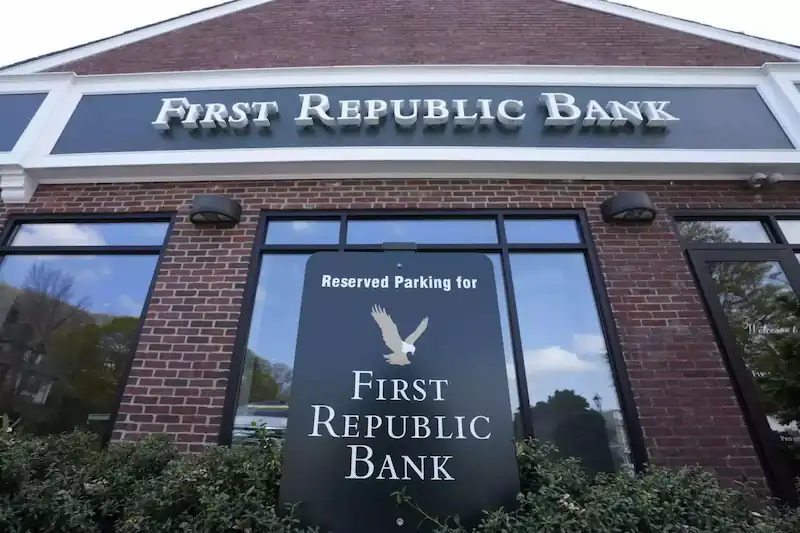


First Republic Bank, a Californian bank that specialized in providing services to wealthy clients, has become the second-largest bank failure in US history after being seized by the Federal Deposit Insurance Corp. (FDIC) earlier this week. The bank had been unable to recover from a combination of declining asset prices and a flood of customer withdrawals. Talks to rescue the lender had dragged on for several weeks before the FDIC struck a deal with JPMorgan Chase & Co. to take over First Republic's assets, including $173 billion of loans and $30 billion of securities, as well as $92 billion in deposits. First Republic had $229 billion of assets as of April 13, making it the second-largest failure after Washington Mutual, which collapsed in 2008 with $307 billion in holdings and total deposits of $188 billion. The FDIC seized Washington Mutual's banking operations and sold them to JPMorgan for $1.9 billion.
This marks the third significant FDIC failure this year, following the collapses of Silicon Valley Bank and Signature Bank in early March. Silicon Valley Bank had $167 billion in assets at the time of its failure. These failures highlight the ongoing challenges faced by banks in the current economic climate, where declining asset prices and a volatile market can have a significant impact on even the most established financial institutions.