


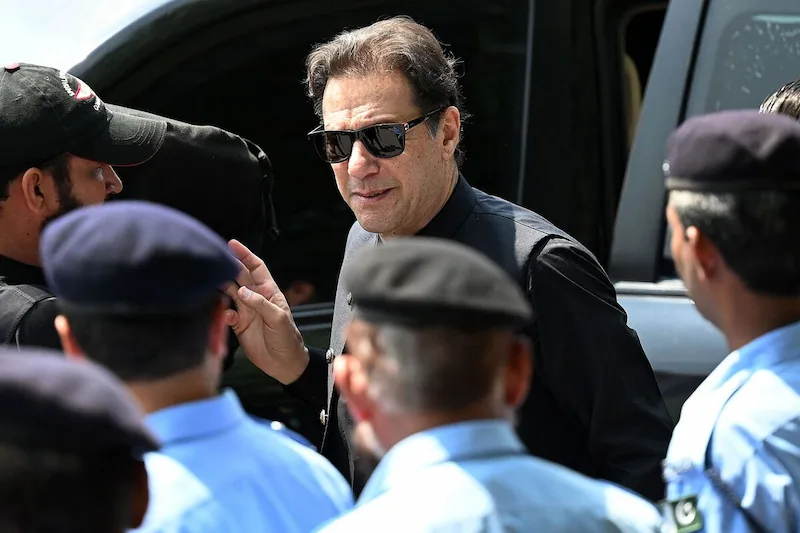


Amidst a tumultuous legal saga, a Pakistani court has made a pivotal decision in favor of former Prime Minister Imran Khan, canceling his last remaining jail sentence. This ruling marks a significant turning point for Khan, who has been incarcerated for nearly a year and faces a myriad of legal challenges.
The court's cancellation of Khan's jail sentence stems from an appeal he lodged challenging his and his wife Bushra Bibi's convictions in an unlawful marriage case, in which they were both sentenced to seven years in prison. The case revolved around the violation of an Islamic law dictating a waiting period for women who have been divorced before they can remarry.
Although this ruling brings a sense of relief to Khan, it is important to note that he still faces several other legal battles. The possibility of his release remains uncertain, hinging on the resolution of pending legal matters. Khan, who was ousted from the prime ministerial position through a parliamentary no-confidence vote over two years ago, has consistently asserted that the legal charges against him are politically motivated, aimed at thwarting his political resurgence.
Recent legal developments have presented mixed outcomes for Khan. While a pre-arrest bail request in a case related to last year's violence was denied, the Supreme Court of Pakistan awarded approximately two dozen parliamentary reserve seats to Khan's supporters. These victories come in the wake of a fiercely contested election overshadowed by violence and allegations of rigging.
Despite these legal victories, Khan's journey to freedom remains intricate and uncertain. The complexities of Pakistan's political landscape, intertwined with Khan's ongoing legal battles, continue to shape the trajectory of his future endeavors. As the legal saga unfolds, the fate of Imran Khan hangs in the balance, with the political landscape of Pakistan poised on the brink of further upheaval.