


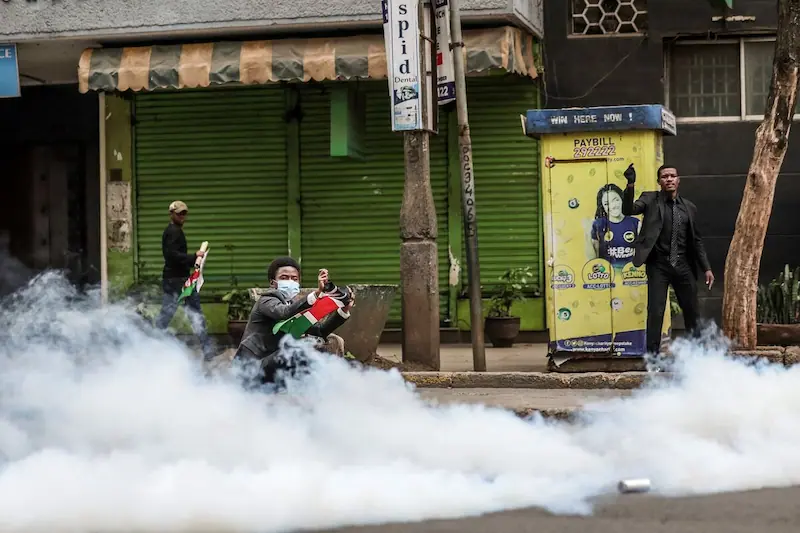


Demonstrations swept through major cities in Kenya as police used tear gas to disperse protesters, leading to the closure of shops and offices in key business districts. These protests, which began over the government's proposed tax hikes, have now evolved into a broader movement calling for significant political reform.
Local media coverage captured crowds in cities such as Nairobi, Mombasa, and Kisumu, among others. The government responded by increasing security forces in critical areas and establishing a national multi-agency command post to manage the situation.
As a result of the unrest, the Kenyan shilling experienced a significant decline, with the currency weakening against the dollar. Meanwhile, the yield on the country's 2031 dollar bonds also fell amidst the growing uncertainty.
The Kenya National Commission on Human Rights reported casualties from the protests, including deaths, injuries, abductions, and arrests. In response to the escalating crisis, President William Ruto scrapped the proposed taxes and made changes to his cabinet and the police hierarchy.
Despite the government's attempts to address the protesters' demands, calls for broader political reform continue, with activists and opposition leaders pushing for Ruto's resignation. While talks were proposed to address the crisis, many protesters remain skeptical of any consultations, prolonging the uncertainty surrounding the situation in Kenya.